About this Toolkit

The policy toolkit translates ENSURED's evidence base into an accessible and actionable format to help policymakers make better strategic decisions on defending and transforming multilateralism. Explore our overarching findings, dive into a policy area, and discover what our cross-cutting research reveals.

Policy Areas

Digitalisation

Why does it matter?

  • Digital spaces are increasingly cross-border and contested, creating new governance challenges for the international community. Artificial intelligence, cryptocurrencies, and cyberspace are key arenas of geopolitical and economic competition, making multilateral approaches more difficult.
  • For the EU, effective governance of digital spaces is essential to manage risks and maintain control over critical infrastructures. Without agreement on frameworks, the risk of illegal activities, erosion of monetary sovereignty, environmental harm, and the misuse of AI – including the spread of disinformation – is likely to increase.

Where is reform possible?

    Major structural reform is unlikely due to geopolitical competition and diverging regulatory approaches. The most realistic path forward is to make incremental improvements within existing frameworks.
  • For AI policy, the Council of Europe’s AI Convention could serve as an entry point for countries without existing regulation and, if widely adopted, help shape global standards.
  • In parallel, cyberspace governance will continue to rely mostly on non-binding forms of cooperation. Forums such as the OEWG and IGF can support progress. In financial governance, targeted steps to increase transparency could improve legitimacy without requiring major institutional reform.

What can the EU do about it?

  • Trade openness correlates with +0.05–0.08 increase in regional Gini coefficients in exposed EU regions
  • Bottom 30% income share ↓ by ~3pp in import-competing sectors
  • Political trust ↓ 10–15% in regions with high trade-induced job loss
Migration & Human Rights

Why does it matter?

  • Global human rights and migration governance are increasingly contested. The rise of authoritarian tendencies challenges established norms and restricts civil society, while also weakening existing frameworks and cutting necessary funding across the board.
  • For the EU, the stakes are high. The UN human rights regime helps advance core EU values and priorities. Weak protections for human rights and poor migration governance could lead to egregious violations against vulnerable communities, fuel political tensions between member states, and complicate cooperation with partner countries.

Where is reform possible?

  • Geopolitical tensions limit prospects for reform. Global migration frameworks will likely remain forums for discussion rather than action, with states prioritising minilateral and bilateral cooperation. Meanwhile, UN human rights mechanisms face pushback but continue to uphold existing standards.
  • Progress will depend on practical measures: strengthening implementation and follow-up on agreements as well as reducing administrative burdens. Protecting civil society participation remains critical. Further steps include reforming complaint procedures, strengthening membership criteria, and ensuring adequate funding of the UN human rights institutions.

What can the EU do about it?

  • Trade openness correlates with +0.05–0.08 increase in regional Gini coefficients in exposed EU regions
  • Bottom 30% income share ↓ by ~3pp in import-competing sectors
  • Political trust ↓ 10–15% in regions with high trade-induced job loss
Health & Pandemics

Why does it matter?

  • Health touches every part of society. But today, global health governance is fragmented, inefficient, and incoherent.
  • The problem: too many actors and overlapping rules weaken the World Health Organization (WHO)’s coordinating role. Plus, limited financing and growing tensions thwart cooperation, and disputes over fair access to health products undermine trust.
  • For the EU, this has serious consequences. Weak health governance increases the risk that future health crises will disrupt European societies, while limiting the EU’s ability to respond quickly and effectively to protect its population.

Where is reform possible?

  • In global health, political divides make major reform unlikely. Instead, the most realistic options are incremental improvements to existing frameworks.
  • How? A key step would be to strengthen the WHO’s role, including through more predictable financing and clearer responsibilities. Progress also depends on the success of the WHO’s Pandemic Agreement, meaning states must finalise it, ratify it, and maintain the political will to see it through.
  • Further gains could include improving transparency and inclusiveness within the WHO, and better connecting EU policies around health, trade, and intellectual property.

What can the EU do about it?

  • Trade openness correlates with +0.05–0.08 increase in regional Gini coefficients in exposed EU regions
  • Bottom 30% income share ↓ by ~3pp in import-competing sectors
  • Political trust ↓ 10–15% in regions with high trade-induced job loss
Trade & Inequality

Why does it matter?

  • Global trade and tax systems struggle to adapt to rising geopolitical tensions. Disagreements among major powers hinder agreement on World Trade Organization (WTO) reform and new rules and weaken core functions like dispute settlement.
  • For the EU, this has direct consequences. European exporters rely on predictable trade rules. When these weaken, businesses face higher tariffs, greater legal uncertainty, and fewer protections against unfair practices.
  • Gaps in global tax governance also allow multinational companies to shift profits across borders, reducing national tax revenues.

Where is reform possible?

  • Across trade and tax governance, geopolitical divides make major structural reform unlikely. The most realistic way forward is to make incremental improvements within existing frameworks.
  • For global tax policy, progress will depend on whether the two parallel initiatives by the OECD/G20 and the UN can come together in a way that is both effective and inclusive.
  • In global trade, reform is more likely to happen through informal and non-binding approaches – such as information sharing, best practices, or voluntary guidelines – rather than new binding rules. This is particularly true in areas where WTO members can see clear benefits.

What can the EU do about it?

  • Trade openness correlates with +0.05–0.08 increase in regional Gini coefficients in exposed EU regions
  • Bottom 30% income share ↓ by ~3pp in import-competing sectors
  • Political trust ↓ 10–15% in regions with high trade-induced job loss
Climate & Sustainability

Why does it matter?

  • The triple planetary crisis (climate change, biodiversity loss, pollution) has spurred high profile multilateral initiatives and agreements, such as the Paris Agreement and the Kunming-Montreal Global Biodiversity Framework (KMGBF).
  • But today, there is a widening gap between environmental ambitions set out in multilateral agreements and real-world action. The problem: limited funding, lack of political will, and continued disagreements among countries hinder progress under these key agreements.
  • For the EU, the consequences are real. Missing climate targets will intensify extreme weather events and threaten both food security and public health. Plus, biodiversity loss erodes natural resilience, leaving the EU vulnerable to climate impacts and raising long-term costs.

Where is reform possible?

  • Reforms within the multilateral climate and biodiversity arenas specifically can target the negotiation spaces (within the UNFCCC and CBD) and/or implementation action.
  • When it comes to multilateral negotiations, consensus-based decision-making, widespread distrust, and limited political will make smaller procedural changes more realistic than substantial reform.
  • To bring negotiations within both conventions forward, trust among parties must be strengthened, capacity-building expanded for more equal participation, and agendas streamlined.
  • To move the implementation of both agreements forward, the commitment of parties will remain essential, ranging from taking ambitious rhetoric positions, enhancing domestic implementation of global targets, and promoting effective financial instruments.

What can the EU do about it?

  • Trade openness correlates with +0.05–0.08 increase in regional Gini coefficients in exposed EU regions
  • Bottom 30% income share ↓ by ~3pp in import-competing sectors
  • Political trust ↓ 10–15% in regions with high trade-induced job loss

Expert Survey

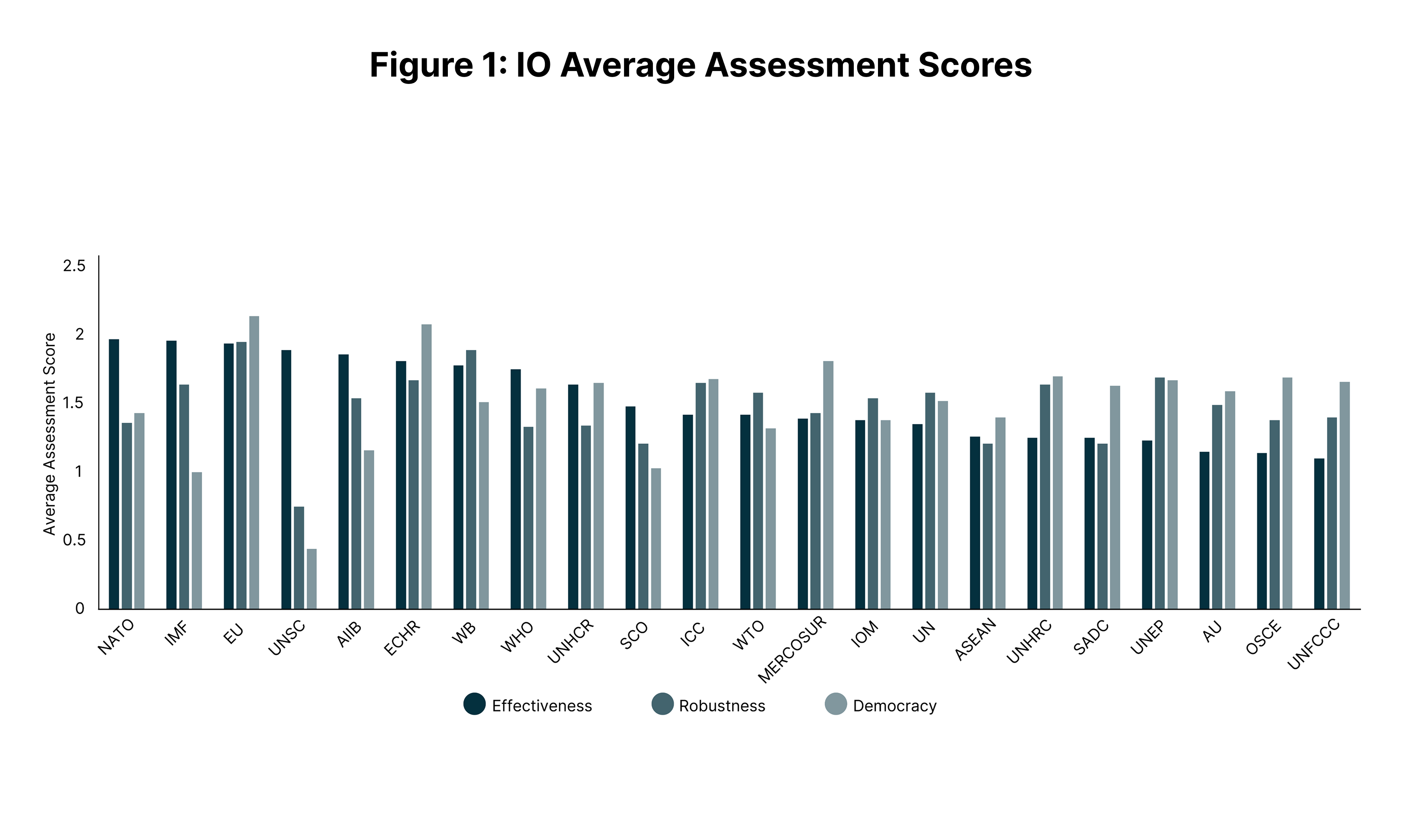
How do experts on international organisations (IOs) in the field view today’s major IOs in terms of effectiveness, robustness, and democratic quality? The ENSURED Expert Survey offers a global assessment of their perspectives on 110 IOs.

Findings & Recommendations

  • Most IOs cannot simultaneously deliver fully on effectiveness, robustness, and democratic legitimacy.
  • Experts expect increasingly complex policy problems, resource crisis, and political gridlock to strain nearly all organisations. Withdrawal by member states is seen as more likely in specialised bodies than in broad, general-purpose institutions.
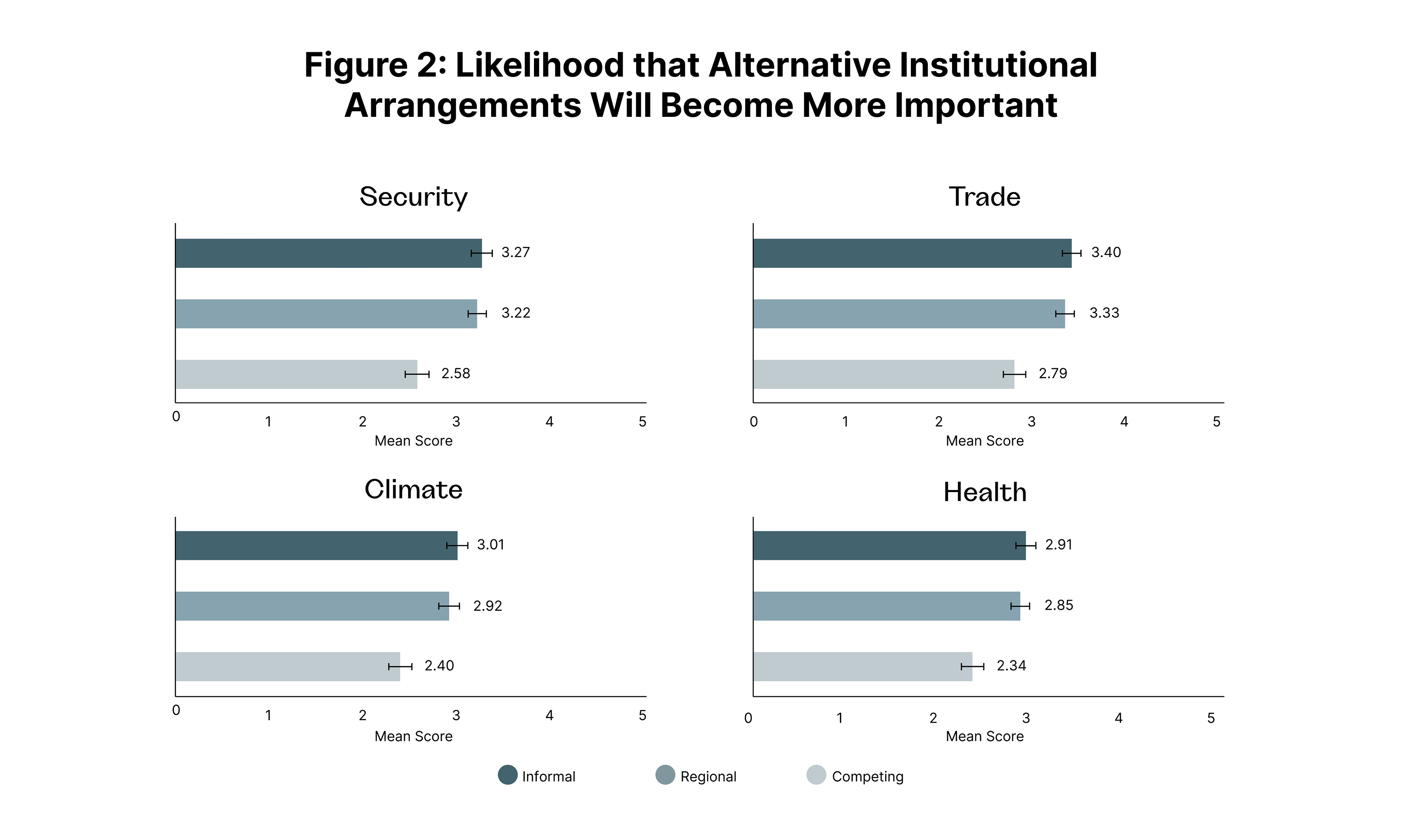
  • Informal and regional formats will more likely become important as flexible alternatives than the emergence of competing institutions; experts anticipate that security and trade will become more strongly defined by alternative arrangements than climate and health.
  • Overall, strong member state compliance is expected to boost IO robustness. The importance of other institutional features depends more on the specific challenge an organisation faces.
-> Download the full expert survey
Image caption that says something about the bar-chart.

Narrativs Report

Maecenas dictum tempor urna, sit amet volutpat risus dignissim sed. Maecenas semper sed diam non venenatis. Curabitur semper volutpat neque vitae mattis. Morbi semper, massa at scelerisque ultrices, nibh sapien dignissim lectus, quis pharetra ipsum libero sed nibh

Findings & Recommendations

  • Political trust ↓ 10–15% in regions with high trade-induced job loss in mid-term elections
  • Trade openness correlates with +0.05–0.08 increase in regional Gini coefficients in exposed EU regions
  • Political trust ↓ 10–15% in regions with high trade-induced
  • Bottom 30% income share ↓ by ~3pp in import-competing sectors within the aerospace industry
  • Political trust ↓ 10–15% in regions with high trade-induced job loss for the first year
-> Download the full narratives report

Data & Resources

Pandemics, inequality, mass migration, climate breakdown: these are challenges that know no borders. To face them, we need collective action on a global scale.
Learn more