Case Studies
Global environmental governance is falling short — in the procedural gridlock of UNFCCC negotiations, the Paris Agreement's implementation gaps, and the struggle to make the Kunming-Montreal Framework stick. These three case studies examine what is going wrong and what the EU can do to move things forward.
UNFCCC Climate Negotiations Under Scrutiny
Despite over three decades of negotiations, the international community remains far from achieving the goals of the 1992 UN Framework Convention on Climate Change (UNFCCC) or the 2015 Paris Agreement. Are the decision-making processes within the UNFCCC up to the challenge?
Key Findings
- The UNFCCC’s proceduralstructure, which requires consensus among parties, is a significant obstacle to achieving the ambitious goals set out in the original Convention and in the Paris Agreement. Combined with overloaded agendas, this structure makes UNFCCC negotiations less effective, often stopping at ‘lowest-common-denominator’ outcomes.
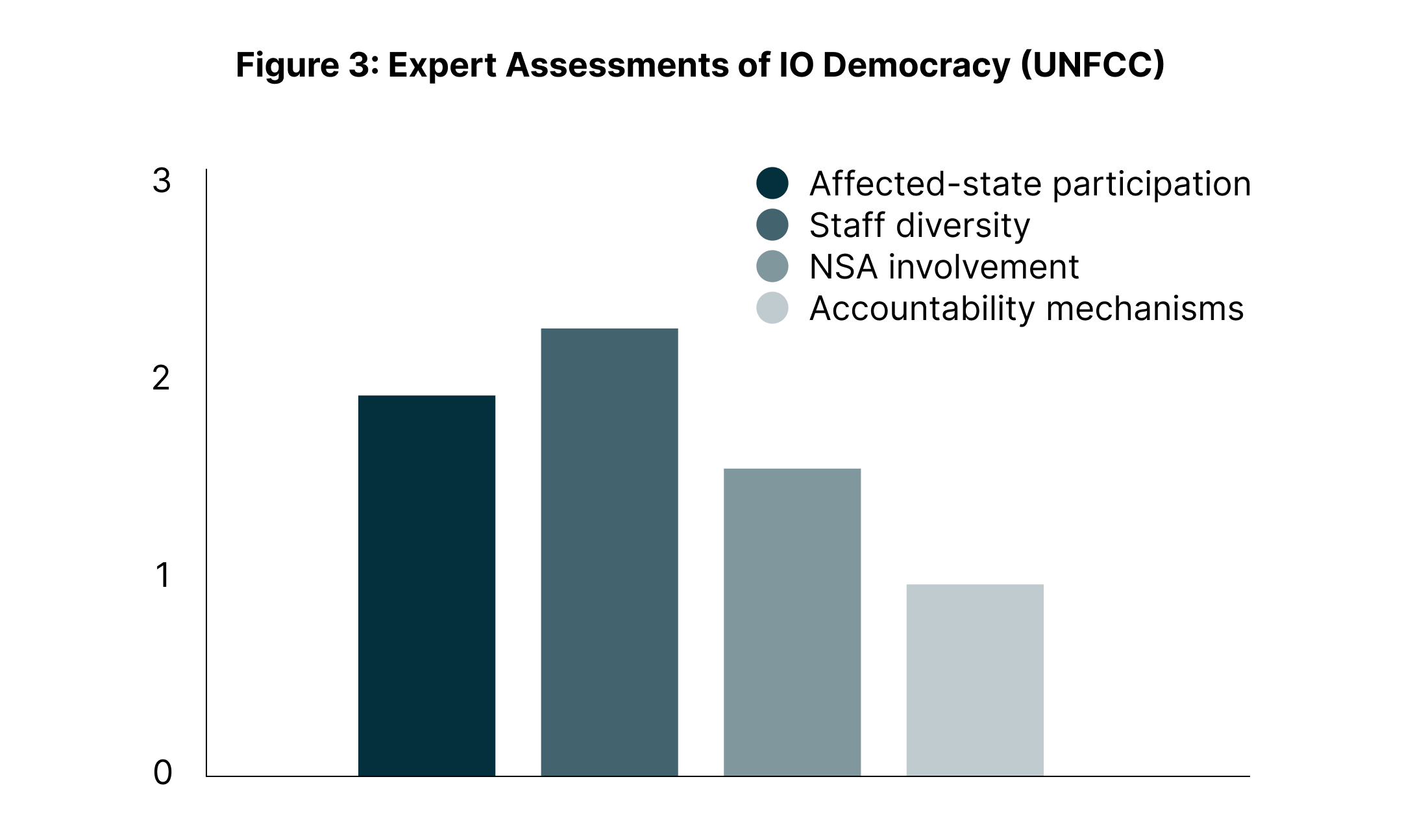
- The UNFCCC process allows all parties to be heard, yet in practice, asymmetrical power and unequal party participation affect the equality between the parties.
- When thinking about UNFCCC reforms (changing decision-making procedures, streamlining agendas, etc.), there are tensions between those efforts to make UNFCCC negotiations more effective and those to make it more democratic.
Key Reform Potential
- The potential for reforming UNFCCC decision-making is limited. It is unlikely that major reform proposals — such as a greater role for non-party stakeholders or a move to majority voting — will obtain consensus. The main reason is the lack of trust among parties, fundamental disagreements, and the lack of shared will to make the UNFCCC process more efficient and effective.
- Regarding reform opportunities, there are however a number of ‘low-hanging fruits.’ These include procedural measures to improve agenda and time management, as well as capacity-building measures to address the unequal participation among party and non-party stakeholders.
Key Actor Positions
The EU emphasises multilateral solutions and calls for more ambition. It assumes responsibility by e.g., providing climate finance, but also reiterates collective responsibility and commitment.
China makes ambitious domestic commitments and supports the UNFCCC process but provides little negotiation leadership; in effect, it supports the status quo.
The US’s positions have shifted alongside changing administrations. Under Obama/Biden, it was ambitious to lead but also hesitant about authority transfer. Under Trump, the US has challenged the fundamentals of global climate governance, including the repeated (announced) withdrawal from the Paris Agreement and the announced withdrawal from the UNFCCC itself.
-> Read more about actor positions in the report
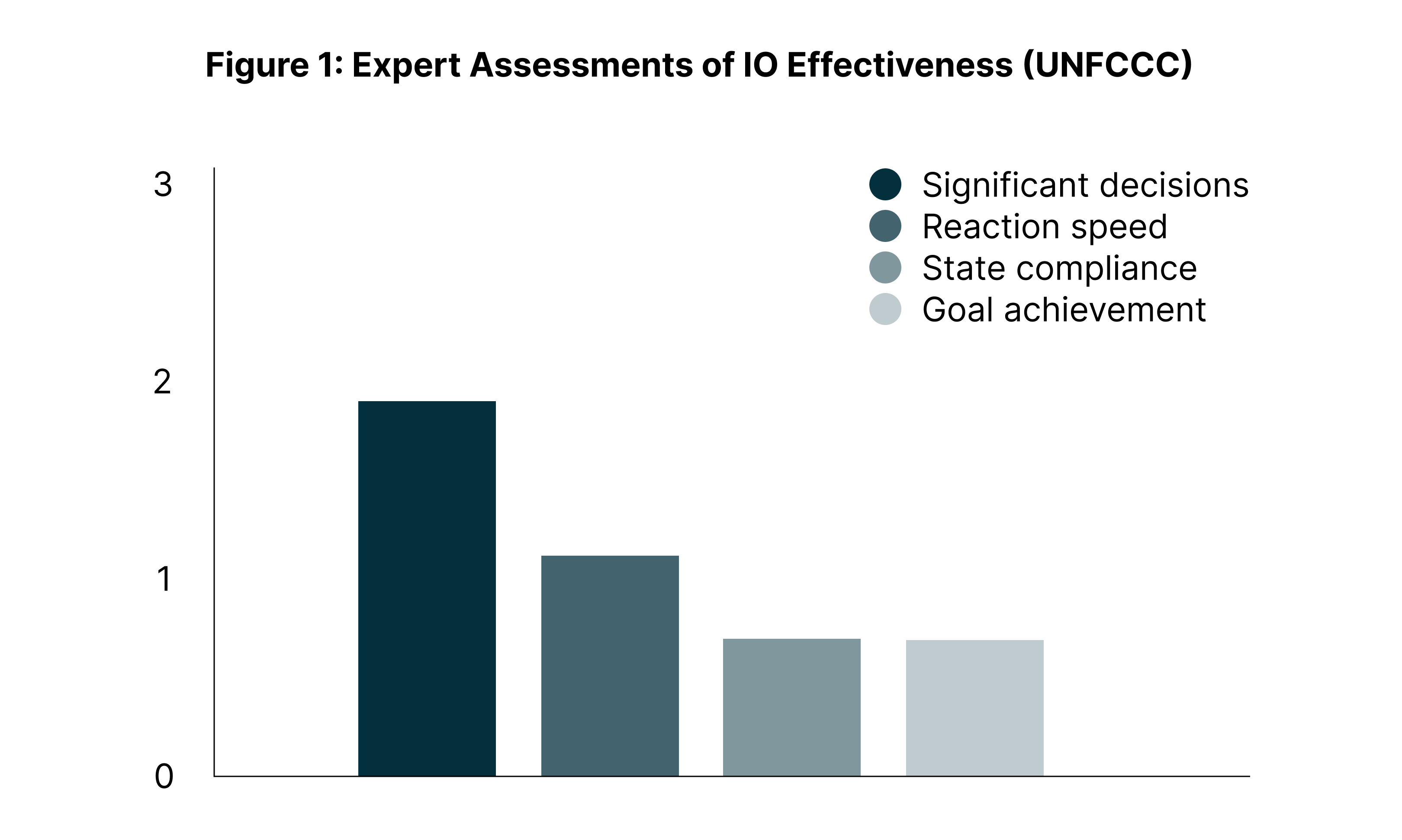
Note: ENSURED experts do not assess the effectiveness of the UNFCCC as high, mirroring responses about the UN. Particularly on reaction speed and goal achievement, the experts do not assess the UNFCCC as very effective. Response options: Very bad description (0) to Very good description (3). Source: Expert Survey
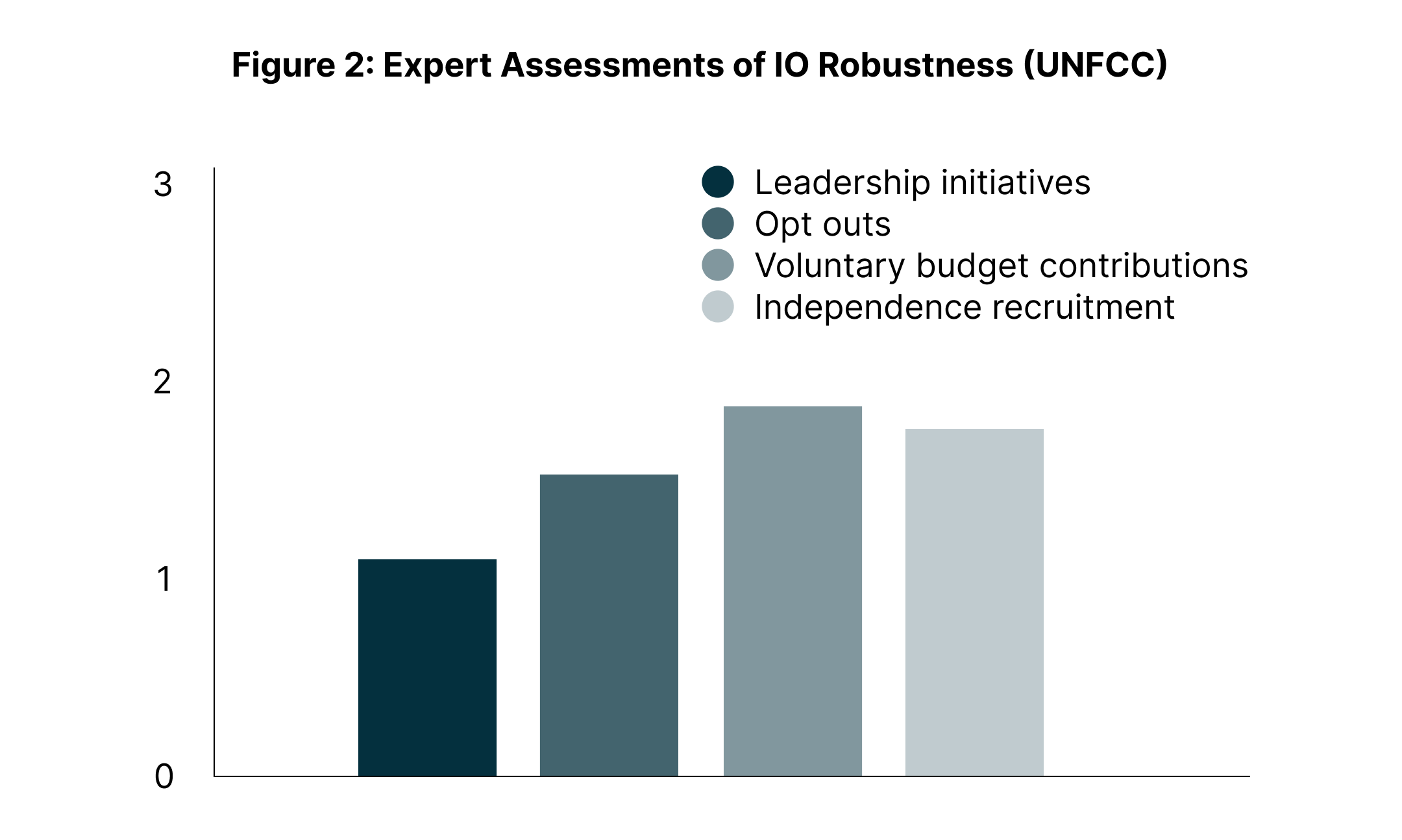
Note: ENSURED experts do assess the robustness of the UNFCCC as intermediate. They assess the leadership initiatives as relatively low, with higher assessed robustness over voluntary budget contributions (i.e. the finance discussions). Response options: Very bad description (0) to Very good
description (3). Source: Expert Survey
Note: ENSURED experts do assess the robustness of the UNFCCC as intermediate. They assess the leadership initiatives as relatively low, with higher assessed robustness over voluntary budget contributions (i.e. the finance discussions). Response options: Very bad description (0) to Very good description (3). Source: Expert Survey
The Paris Agreement Turns 10
More than a decade after the Paris Agreement was adopted in 2015, the climate crisis is more severe than ever. How can it still deliver on its promises to limit global warming to well below 2°C?
Key Findings
- The Paris Agreement has reached near-universal participation, yet struggles to deliver its promises: it falls behind on delivering substantive and procedural outcomes, most notably in reaching ambitious domestic climate action.
- A key shortcoming is that its original design and operationalisation prioritises flexibility over strict rules, which has helped secure participation but often limits effectiveness.
- Another key shortcoming lies in multilateral climate finance, as flows from developed to developing countries remain insufficient and, even more so in times of UN budget crisis, are increasingly uncertain, which undermines trust.
Key Reform Potential
- Continue to treat the Paris Agreement as the central node in global climate governance and enhance synergies between parallel conventions (such as biodiversity).
- Focus reform on implementation, not redesign. Major structural reform of the Paris Agreement is politically unlikely, but the 2028 review can strengthen existing tools such as the Global Stocktake. Future reform should also focus on enhanced transparency, overcoming policy silos, and more tangible climate outcomes.
Key Actor Positions
The EU positions itself as an advocate of ambitious, inclusive, and rules-based climate governance, acknowledging the concept of Common But Differentiated Responsibilities and Respective Capabilities (CBDR-RC). However, it faces internal debates over the pace of its own climate action.
China increasingly presents itself as the guardian of multilateral climate governance, particularly as the US has disengaged. It emphasises both CBDR-RC and national sovereignty, opposing uniform requirements.
The US is a highly volatile actor, swinging between cooperative leadership and disengagement, depending on the political administration. The 2026 Trump announcement to withdraw from both the Paris Agreement and the UNFCCC is a clear example.
-> Read more about actor positions in the report
Note: Over 30 years of UNFCCC governance, the balance among parties has shifted. Source: The Paris Agreement Turns 10 Report
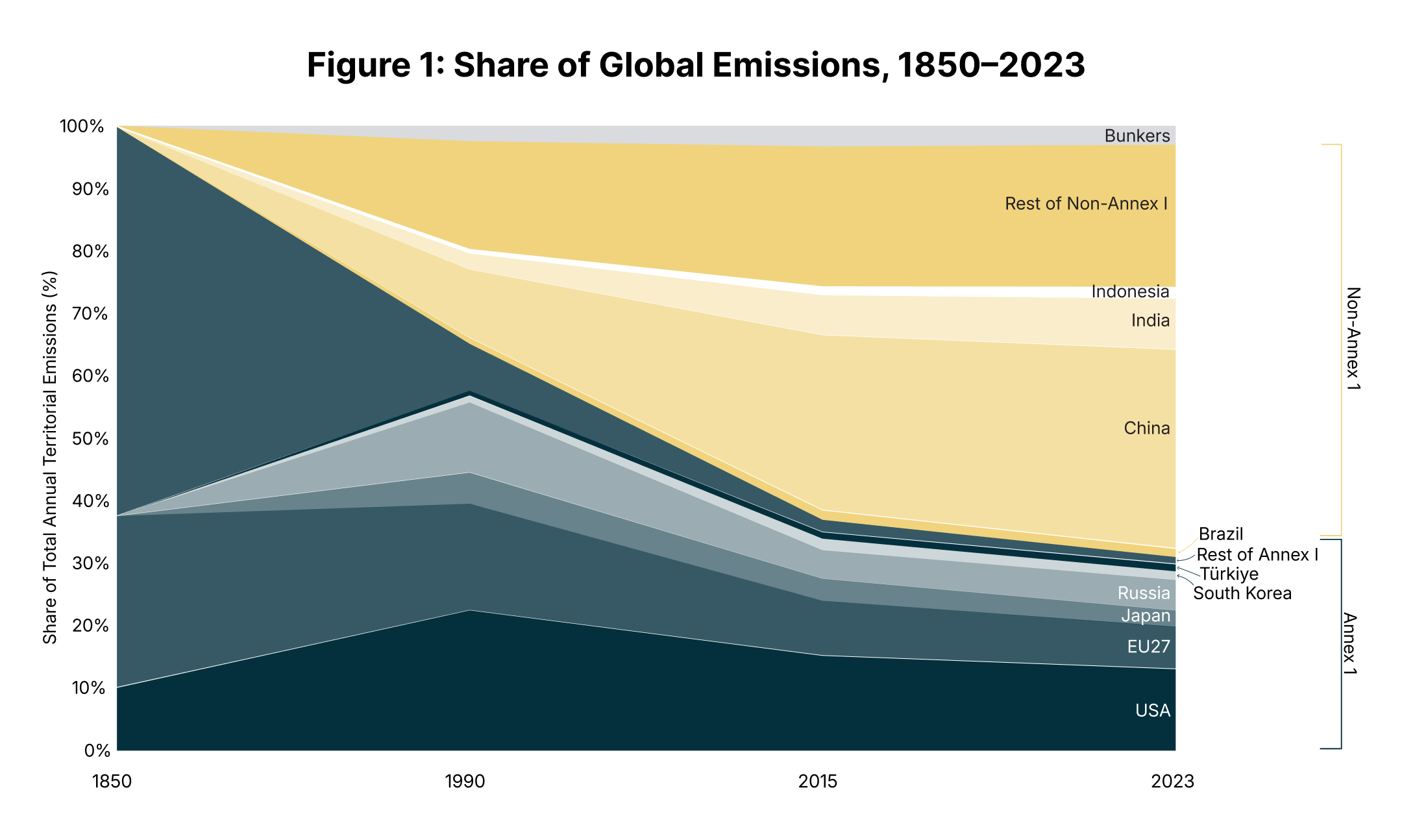
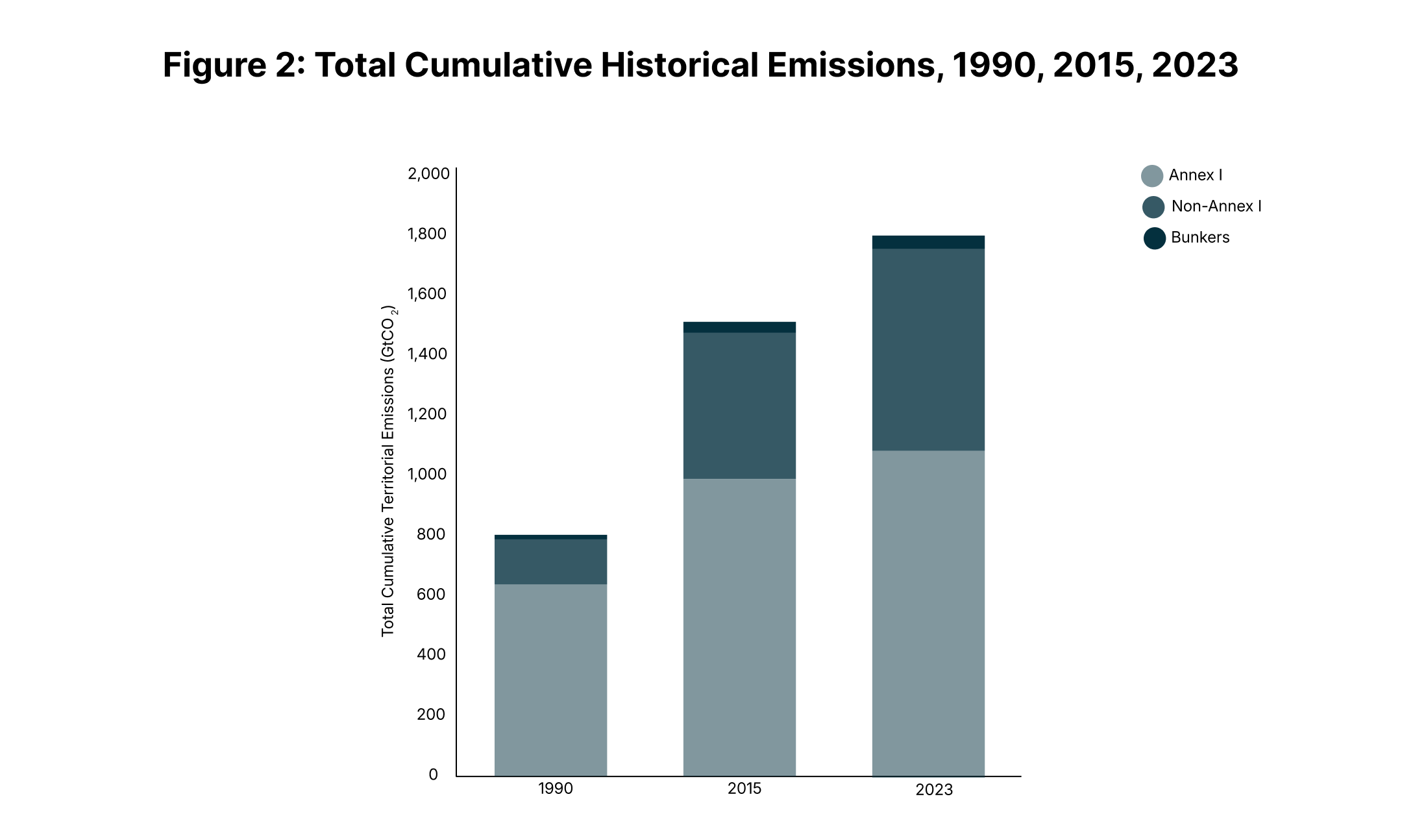
Note: The rise in cumulative emissions since the Paris Agreement (2015) mainly took place in non-Annex I countries. However, cumulatively, developed countries in Annex I still account for the majority of emissions. Source: The Paris Agreement Turns 10 Report
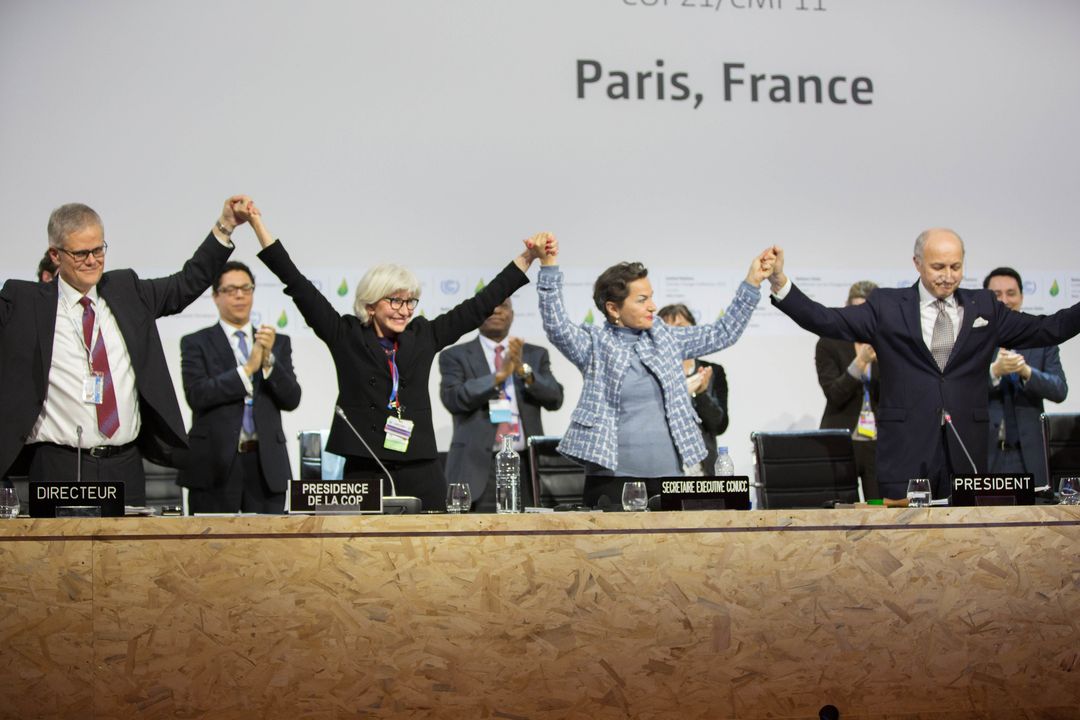
Photo: UN Climate Change / Flickr (CC BY-NC-ND 2.0)
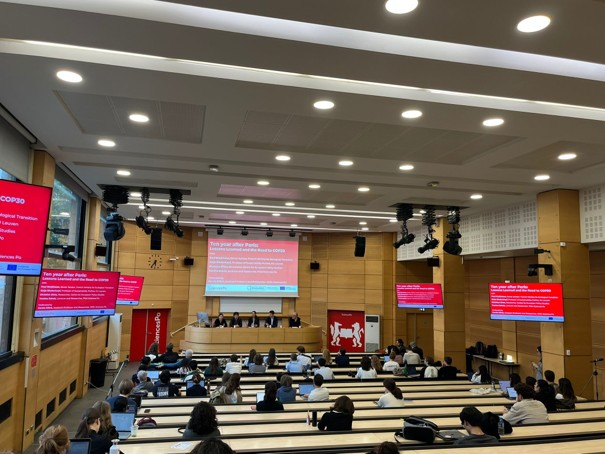
Note: ENSURED researchers presenting their findings at an expert roundtable at Sciences Po PSIA and CERI on the 15th of October 2025.
Moving Global Biodiversity Governance Forward
More than thirty years after the adoption of the Convention on Biological Diversity (CBD), the world continues to face staggering losses in biodiversity. In times of increasing geopolitical polarisation, is the CBD up to the task?
Key Findings
- With the adoption and the operationalisation of the new Kunming-Montreal Global Biodiversity Framework (KMGBF), the CBD has reached significant progress in global biodiversity governance.
- The KMGBF has built momentum, but significant challenges to effectively implement it remain (e.g., on the reporting process and financial instruments).
- Immediate and far-reaching reforms of these mechanisms are however unlikely considering the novelty of the framework and disagreements among parties. Such reforms may also bring difficult trade-offs.
- In a context of heightened geopolitical polarisation, the CBD process has proven relatively robust. Yet, parties have to continue working on the negotiation’s and framework’s functioning to keep up momentum for implementation.
Key Reform Potential
- Further improve the CBD decision-making process towards more efficient and effective meetings of the parties and towards increased participation of non-party stakeholders.
- Increase parties’ commitment to implementing the KMGBF through an increase in financial resources made available for biodiversity as well as a review of targets and reporting processes.
- The upcoming COP17 will be crucial to signal continued momentum and to make use of appropriate review mechanisms, both for new negotiation processes (e.g., participation of Indigenous Peoples) and for implementation progress via the results presented in the global report on collective progress.
Key Actor Positions
The EU supports ambitious targets but also has certain red lines (e.g., no extrafinancial mechanism). It is considered influential among developed actors.
China plays an increasing role in the CBD (e.g., COP15 presidency), yet it is not a party to all protocols and emphasises the importance of a party-driven processes.
The US has chosen not to be a party, due to perceived threats of sovereignty loss. The Obama/Biden administrations used CBD-aligned rhetoric and played an important role in providing global environmental finance, while the Trump administration has not shown interest.
-> Read more about actor positions in the report
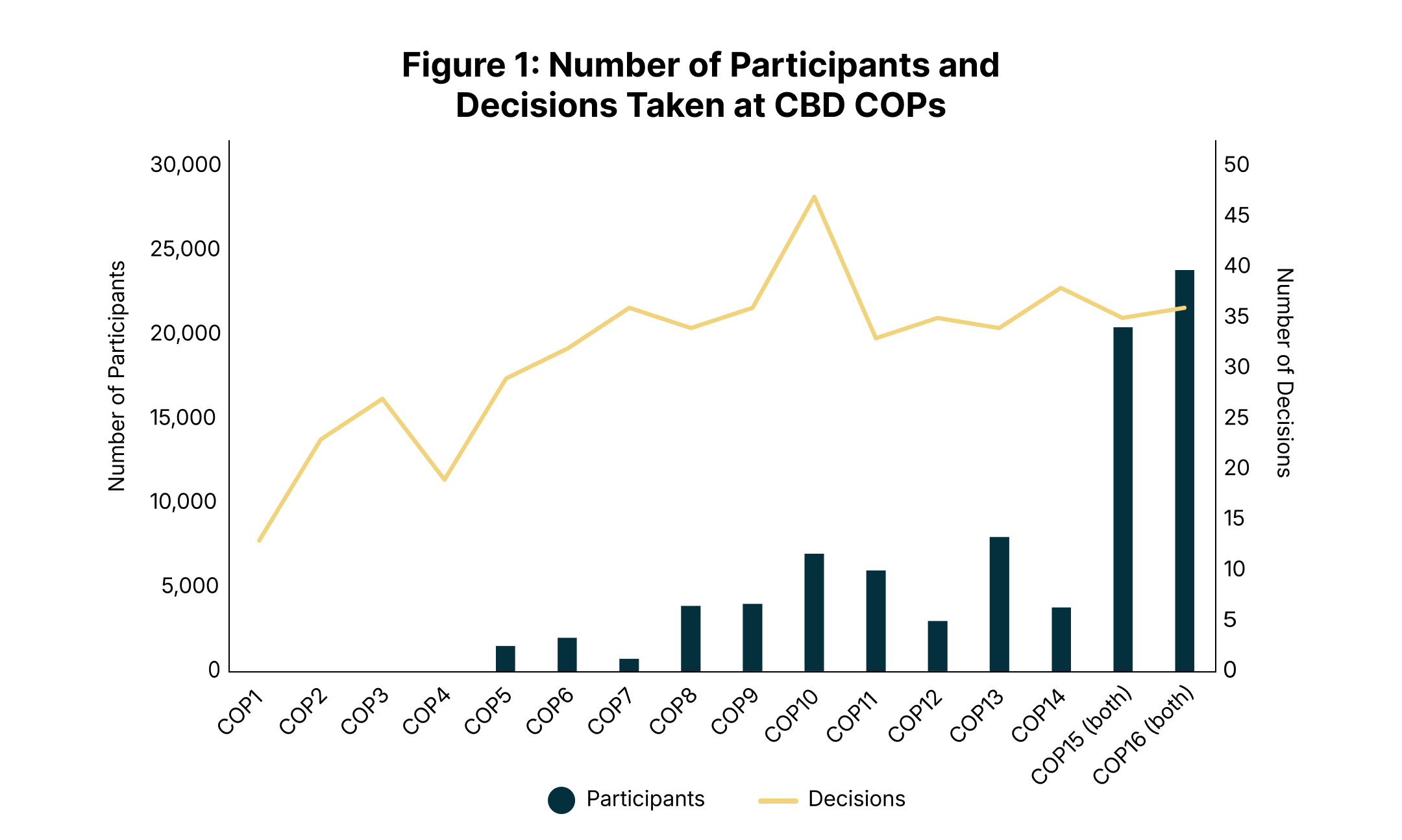
Note: Since COP15, participation to the COPs has skyrocketed, coinciding with the adoption of the KMGBF. But number of participants does not mean equal participation, as non-party stakeholders still face issues providing input. Source: Global Biodiversity Report.
Photo: UN Biodiversity/Flickr (CC BY 2.0).
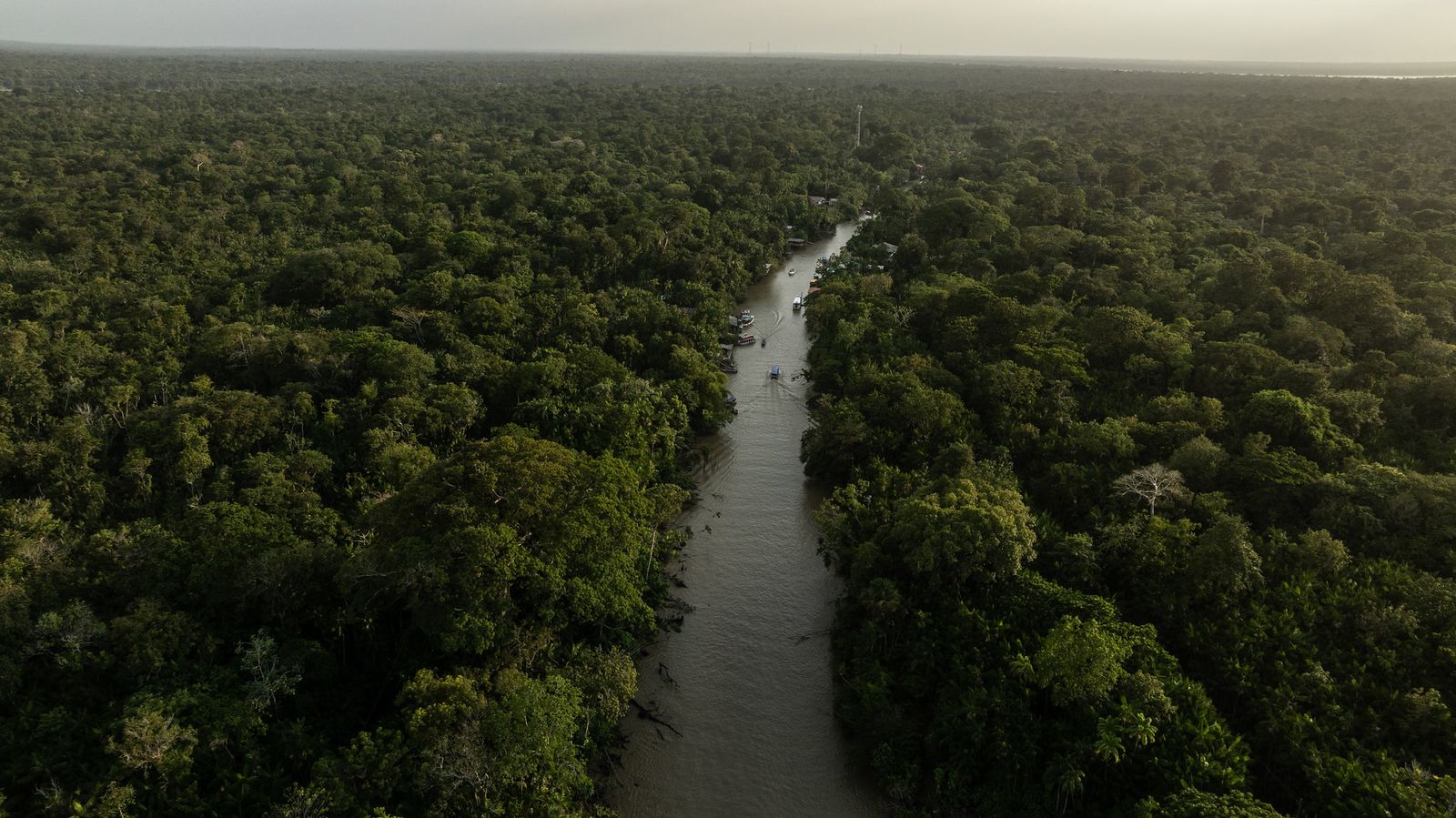
Photo: Dado Galdieri/CIFOR-ICRAF / Flickr (CC BY-NC-ND 4.0)



.png)


