Case Studies
From the rollback of gender and LGBTQI+ rights to the limits of the Global Compacts to the challenges facing the Human Rights Council, these three case studies explore where global governance is under threat and where reform is still possible.
Global Governance of Sex and Gender
After decades of progress and some landmark wins, women’s andLGBTQI+ rights are becoming increasingly contested on the global stage. How resilient is women’s and LGBTQI+ rights governance in the face of contestation?
Key Findings
- While the global governance of women’s and LGBTQI+ rights is significantly more institutionalised than it was two decades ago, it is still extremely fragile.
- The enduring political divergences surrounding sexual orientation, gender identity, and reproductive rights are significantly impacting the functioning of the relevant governing bodies.
- The current ideological pushback is also profoundly hindering efforts to improve effectiveness and democracy. More importantly, it is revealing underlying vulnerabilities in the robustness of the human rights system.
- Its future will likely be shaped less by expansive norm-building than by defensive strategies, regional variation, and the sustained investment of political and financial resources required to preserve its effectiveness, robustness, and democracy.
Key Reform Potential
- Strengthen follow-up and implementation mechanisms, including closer engagement with UN country teams, support for national reporting systems, and stronger coordination with National Human Rights Institutions.
- Prioritise practical and digital reforms, such as streamlining procedures, expanding digital reporting tools, and improving coordination across treaty bodies to increase efficiency under resource constraints.
- Reinforce existing human rights commitments, rather than pursuing new treaties, by supporting initiatives that consolidate norms (e.g. on gender equality) and ensure continued political backing.
- Protect and expand civic space, including through better support for civil society participation, improved access to information, and stronger safeguards against reprisals.
Key Actor Positions
The EU is a consistent supporter of both multilateralism and human rights, providing financial, political, and normative backing to the UN system. It promotes gender equality and LGBTQI+ rights despite contestation, while also working to protect and expand civic space through funding, diplomacy, and support for key UN mandates.
China promotes a sovereignty-centred and state-led approach to human rights, prioritising development and limiting the role of civil society in international processes. At the multilateral level, its approach is selective, emphasising economic and social rights over civil and political rights and resisting external scrutiny.
US engagement with the human rights system is inconsistent. US engagement has fluctuated across administrations, with shifting priorities between multilateral rights protections and sovereignty-centered approaches.
-> Read more about actor positions in the report
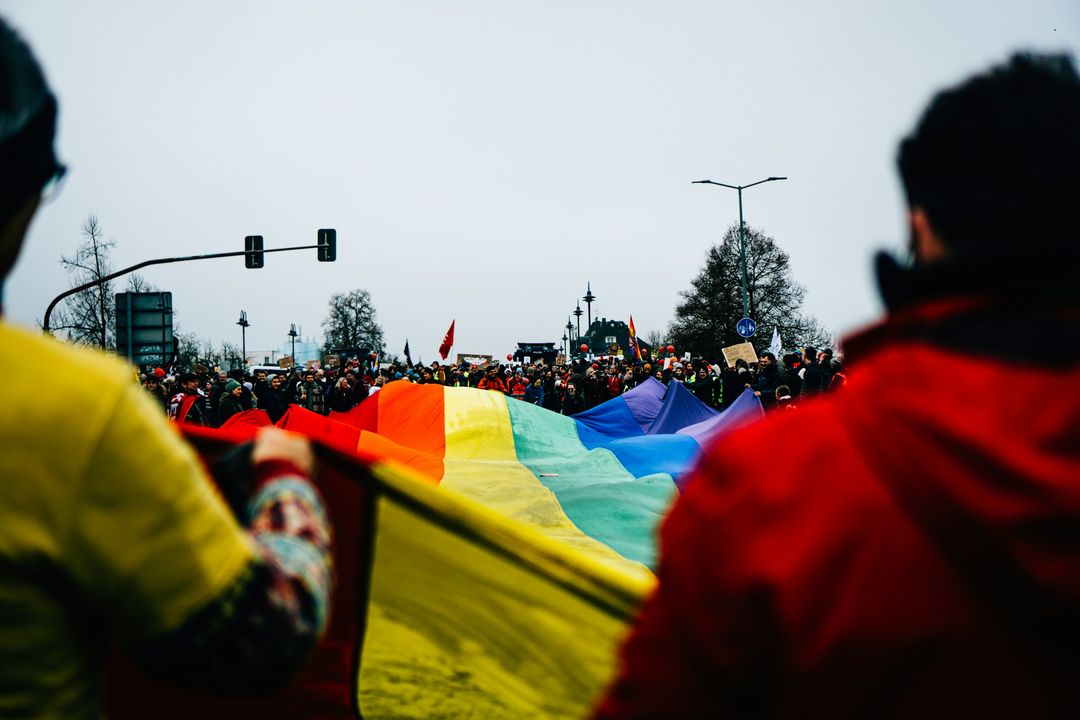
Photo: Christian Lue/Unsplash (Unsplash Licence)
Transforming Global Migration Governance
The UN Global Compact on Migration (GCM) and the UN Global Compact on Refugees (GCR) have been tasked with fostering international cooperation on migration and refugee policy. Have these Compacts delivered as promised, and what reform could help them perform better?
Key Findings
- Global migration governance faces five central challenges: limited labour mobility, lack of protection, non-binding compacts, weak accountability, and declining funding.
- The Global Compacts reaffirm existing agreements and provide innovative elements, but remain non-binding and under-resourced.
- Platforms like the International Migration Review Forum and Global Refugee Forum enhance dialogue and inclusiveness, but lack accountability.
- Far-reaching binding reforms are unlikely to happen; even targeted improvements face political obstacles.
- Migration governance is drifting toward minilateral and bilateral cooperation, risking a further weakening of the global frameworks.
Key Reform Potential
- Strengthen accountability through the 2026 International Migration Review Forum (IMRF) process. Co-facilitators and the UN Secretariat could use the 2019 IMRF Modalities Resolution to introduce more robust reporting and follow-up mechanisms, even without renegotiating the Compacts themselves.
- Protect migration governance within the UN system. Any restructuring driven by funding pressures should avoid diluting migration and refugee issues within broader humanitarian reform, as this could reduce attention, resources, and institutional autonomy.
- Avoid overreliance on ad hoc bilateral and minilateral deals. Be cautious about externalisation arrangements that may deliver short-term control but would weaken long-term rights protection, coherence, and the broader multilateral system.
Key Actor Positions
The EU is a strong financial and political supporter of global migration governance; it continues to back participation in the Global Compacts. Its overall position is undermined by internal divisions, as well as mixed policy signals.
China has shown a growing interest in global migration governance, supporting both Global Compacts and increasing its financial engagement. Labour mobility and refugee protection remain low domestic priorities.
The US has taken a selective and highly variable approach to global migration governance. It has long been a major donor, but it has avoided binding commitments. It has also shifted course across administrations on the Global Compacts and has prioritised domestic migration control.
-> Read more about actor positions in the report
Photo: Markus Spiske / Unsplash (CC BY 2.0)
Human Rights Council
The UN Human Rights Council (HRC), the primary body for the protection and promotion of human rights, stands at a critical juncture. What are the key challenges for the HRC and how could they be overcome?
Key Findings
- Long-term underfunding and rising political tensions undermine the HRC’s robustness and make it unlikely for there to be any significant improvement soon.
- Structural constraints and disagreements among member states regarding priorities limit the HRC’s overall effectiveness.
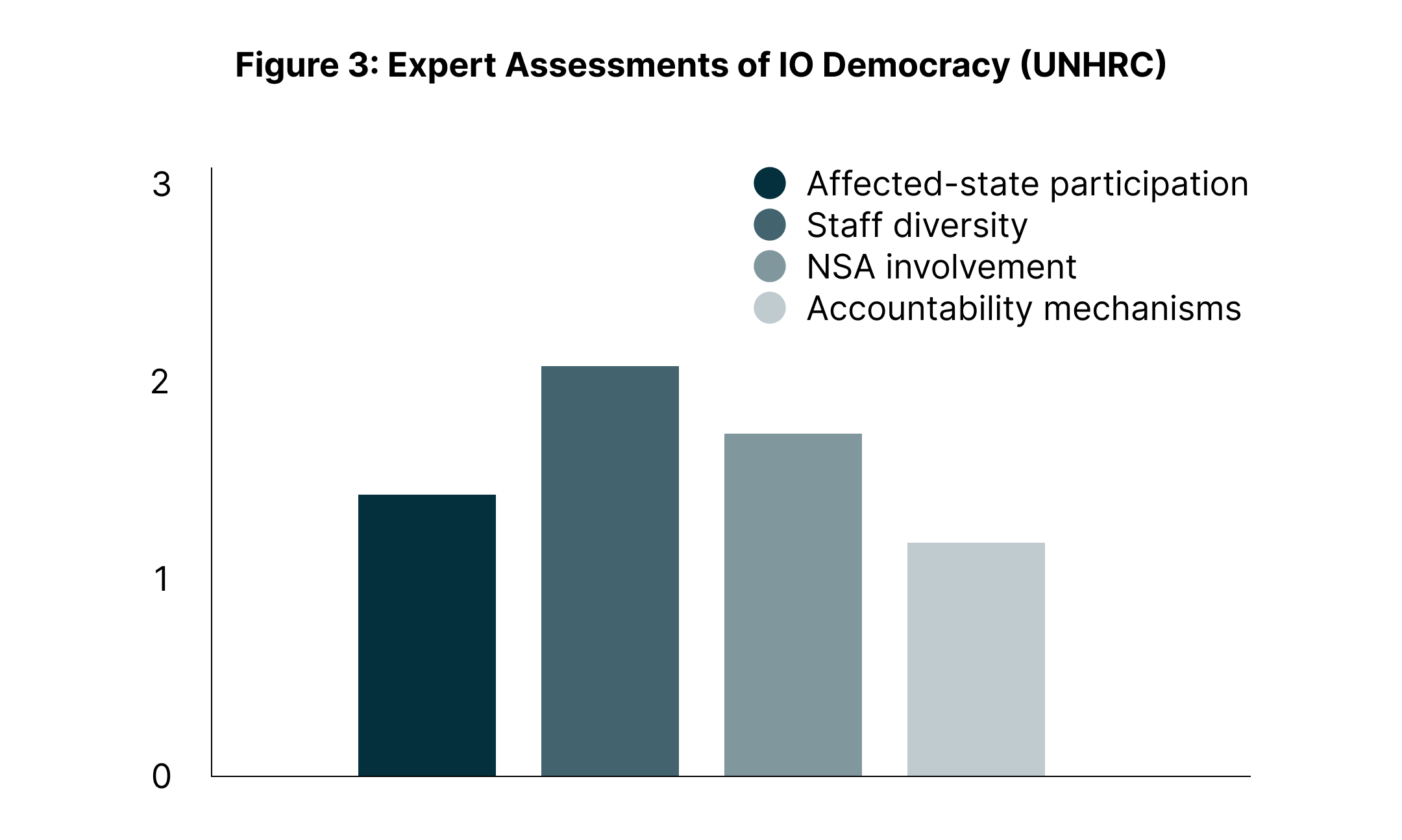
- The HRC still shows some democratic strengths, such as transparency and consultation. However, increasing restrictions on civil society participation are putting this at risk.
Key Reform Potential
- Strengthen accountability mechanisms. Reform the complaint procedure to increase transparency, early warning capacity, and follow-up, alongside better monitoring of state compliance and greater public visibility (e.g., Universal Periodic Review tracking).
- Improve membership and participation. Introduce stricter, human rights-based membership criteria, more competitive elections, and an expansion of inclusion, while safeguarding and enhancing civil society access through accreditation reform and protection against reprisals.
- Address resource constraints. Ensure regular funding, strengthen the Office of the High Commissioner for Human Rights (OHCHR) and the Special Procedures. Invest in implementation capacity, although political will and budgetary pressures make substantial increases unlikely.
Key Actor Positions
The EU strongly supports the UN human rights system, which advances EU values and external priorities. It aims to make it more accountable, transparent, and advocates for civil society participation. Internal divisions and efficiency-driven reforms can lead to selective positions and limit overall effectiveness.
China cooperates with the HRC selectively. It prioritises national sovereignty, undermines core rules, and proposes reforms to prevent interference in internal affairs.
US support for the HRC has been inconsistent. While it has been a major financial contributor and has backed reform efforts, it has also withdrawn from the HRC during the Trump administrations.
-> Read more about actor positions in the report
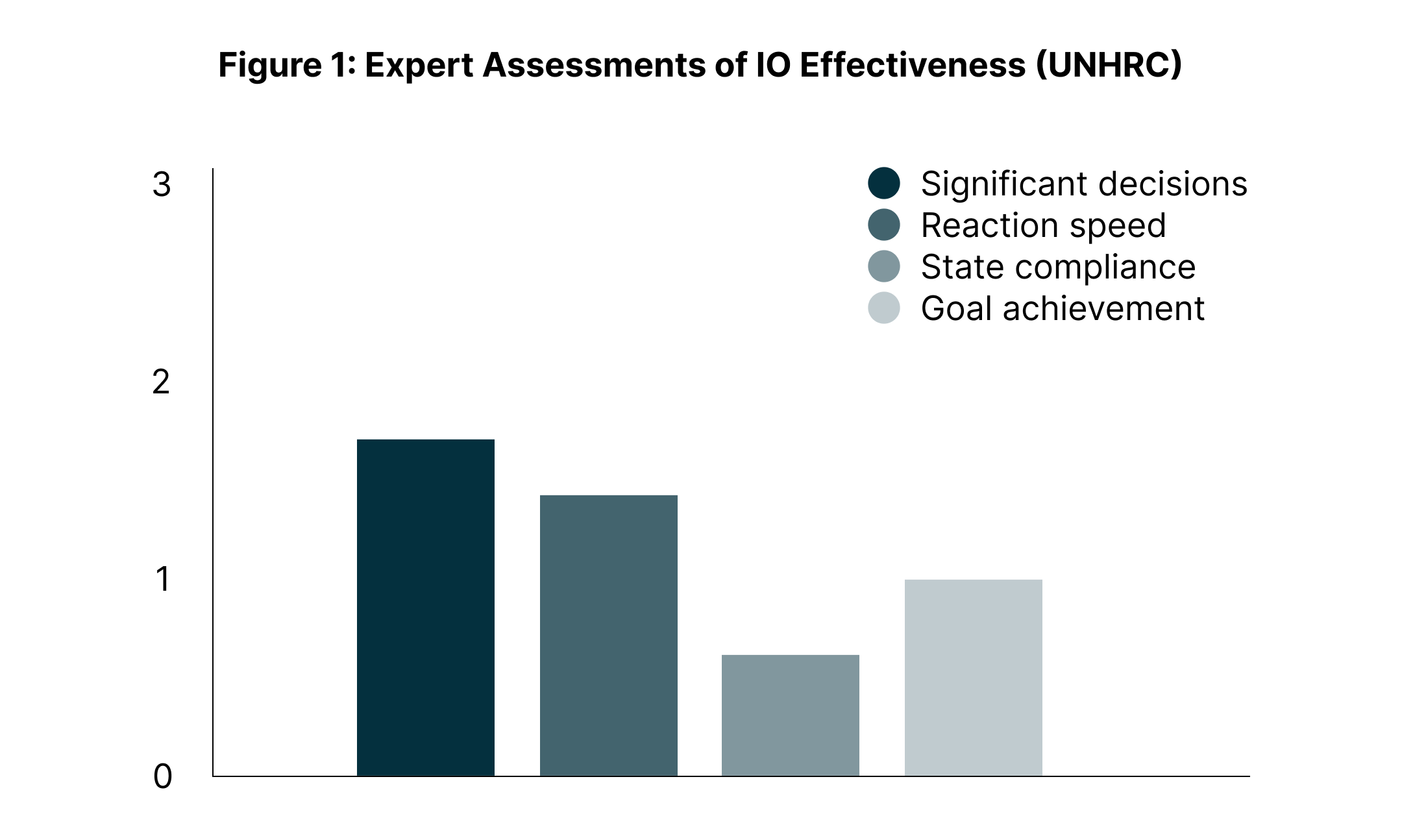
Note: IO experts assess the UN Human Rights Council as moderately effective, with stronger ratings for decision-making and responsiveness, but weaker assessments of compliance and goal achievement. Response options: Very bad description (0) to Very good description (3). Source: Expert Survey
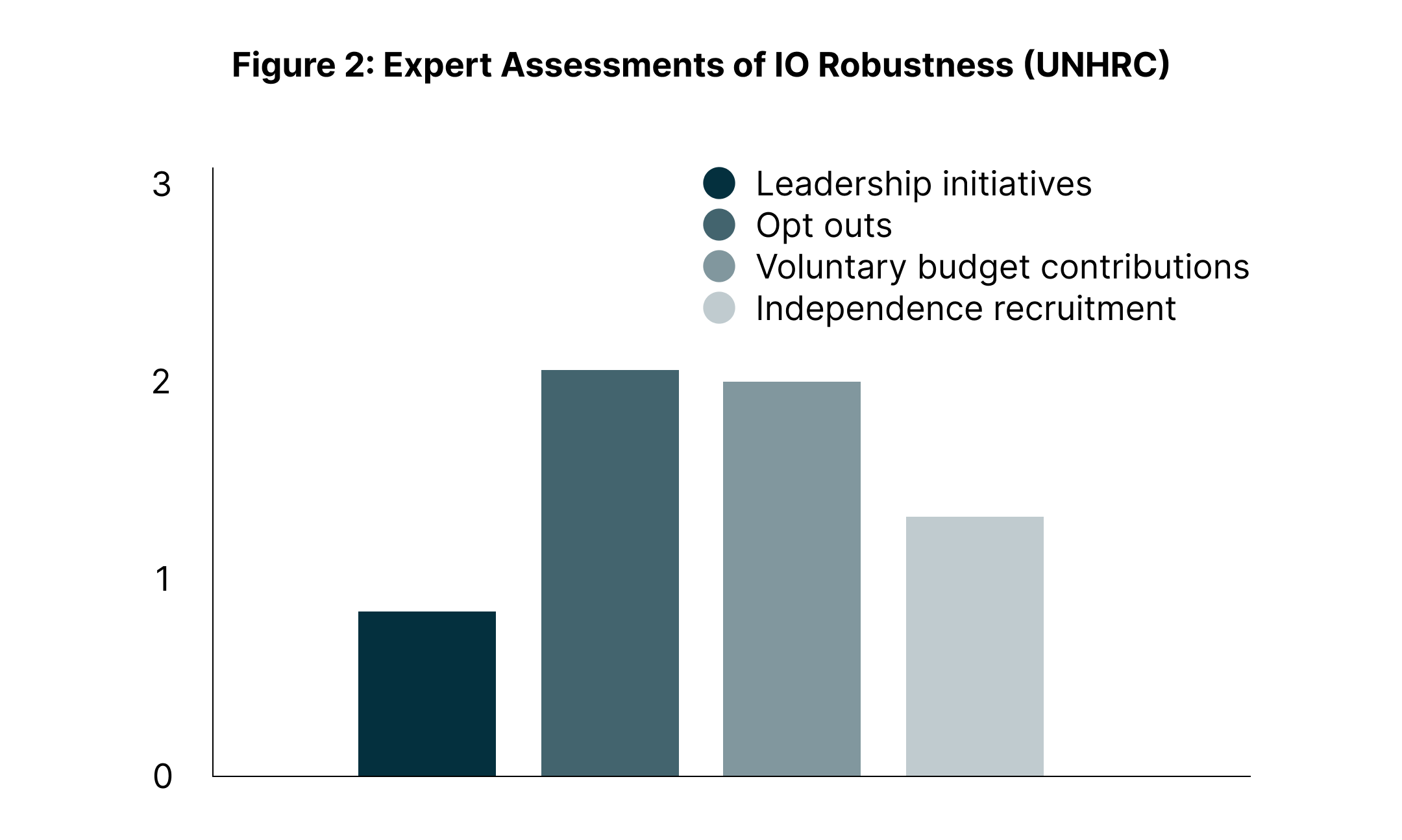
Note: IO experts assess the UN Human Rights Council as moderately robust, with stronger ratings on opt-outs and budget stability, but weaker assessments of leadership initiatives and independent recruitment. Response options: Very bad description (0) to Very good description (3). Source: Expert Survey
Note: IO experts assess the UN Human Rights Council as moderately democratic, with staff diversity and non-state actor involvement rated relatively positively. Response options: Very bad description (0) to Very good description (3). Source: Expert Survey


.png)


