Case Studies
From WHO reform to pandemic preparedness to vaccine access, these three case studies unpack the fault lines in global health governance and what the EU can do to help fix them.
Reforming the WHO
The COVID-19 pandemic marked one of the greatest challenges the World Health Organization (WHO) has faced. How far has the WHO come in addressing the weaknesses laid bare by the pandemic, and where do challenges remain?
Key Findings
- The reform agenda has shown significant momentum, but has mainly focused on making the WHO more robust, and (to a lesser extent) more effective.
- Issues such as accountability, inclusiveness, and conflicts of interest have received less attention and remain unresolved.
- The pandemic strengthened anti-globalist and anti-science narratives, but it also showed how essential the WHO is for global health cooperation.
- Despite major contestation, the WHO is still grounded in a strong underlying legitimacy — its core purpose, protecting global health, remains widely recognised and respected.
Key Reform Potential
- As the WHO contends with an increasingly crowded health governance space, increasing geopoliticisation, and possible funding shortfalls (with the US announcing its withdrawal in January 2026), it will have to do “more with less” — or possibly even “less with less.”
Key Actor Positions
The EU takes a selective approach to reform, supporting a stronger WHO as the coreof global health governance while seeking to limit its policy scope.
China remains a status quo-oriented actor. It has shown some willingness to step in where the US has withdrawn, but it continues to favour bilateral arrangements alongside its support for multilateral frameworks.
The withdrawal of the Trump administration from the WHO is unprecedented. However, it reflects longstanding tensions and follows a broader pattern of using pressure — such as propping up WHO competitors — to push for reforms.
-> Read more about actor positions in the report
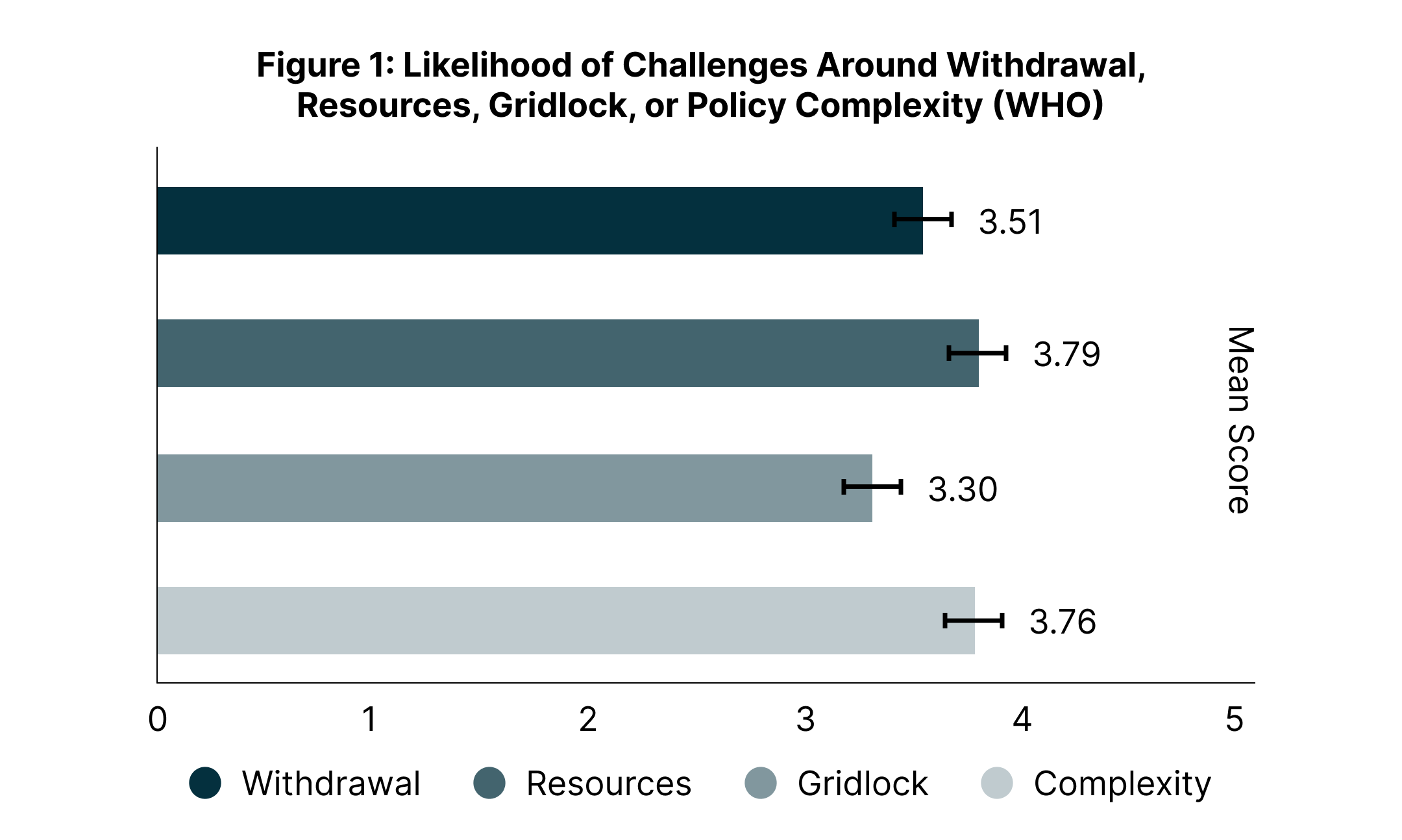
Note: Experts expect the WHO to face significant challenges by 2030, particularly around member-state withdrawal, resources, and policy complexity. Source: Expert Survey.
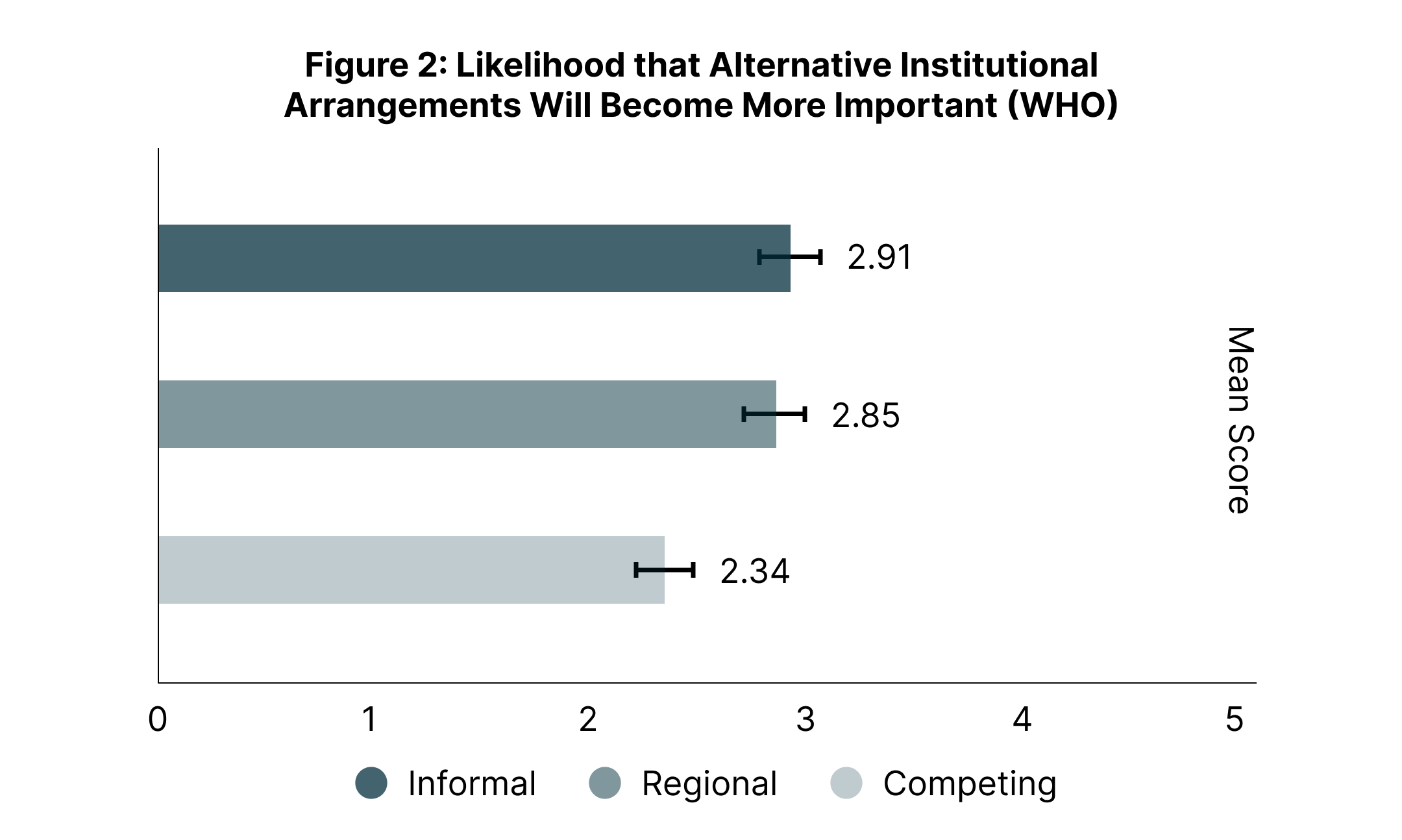
Note: Experts expect informal and regional arrangements to gain importance by 2030 in global health, while competing institutions are seen as less likely. Source: Expert Survey
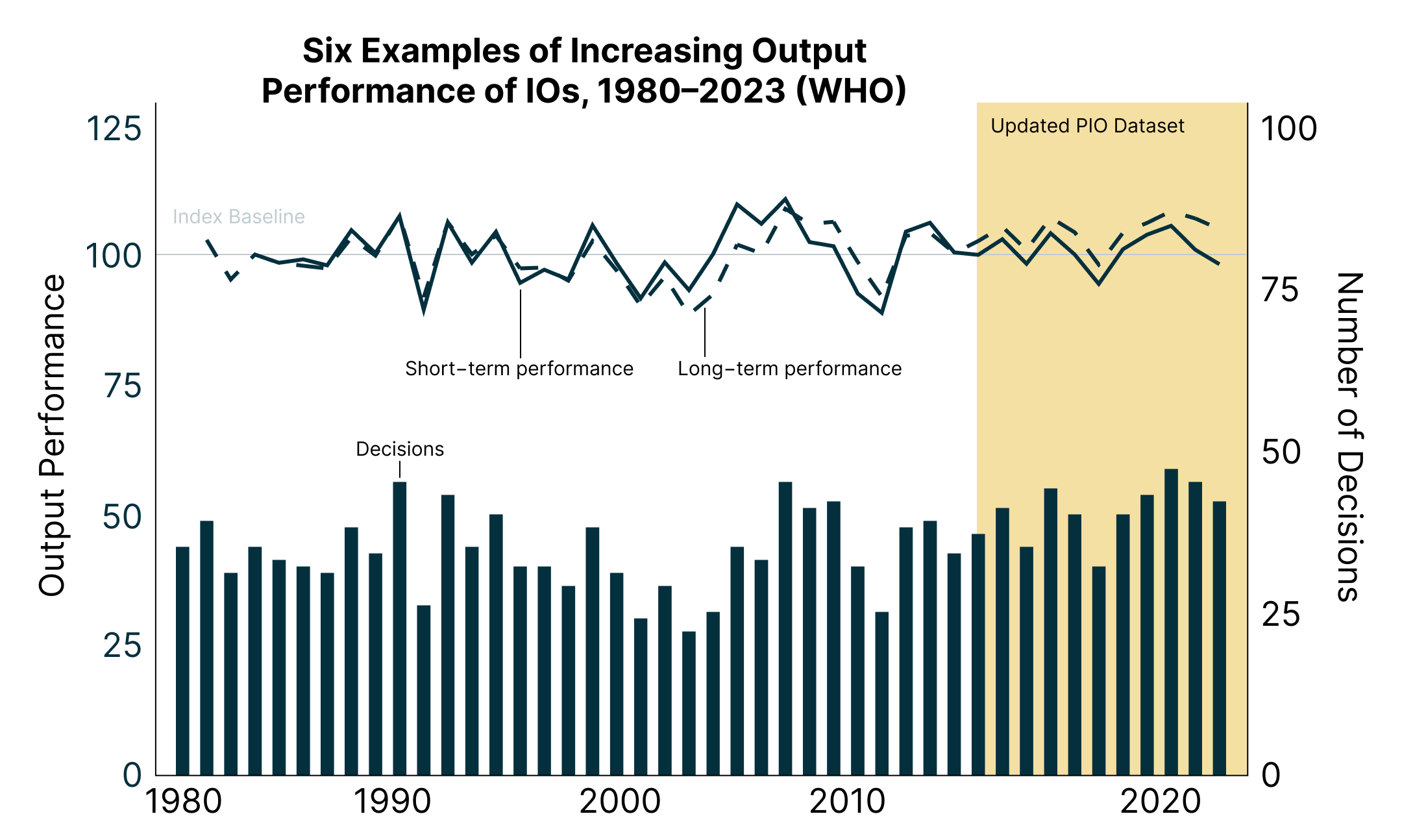
Note: The WHO shows slightly increasing output performance. Source: Between Stability and Stagnation Report
The WHO Pandemic Agreement
Following the COVID-19 pandemic, the WHO member states began negotiating a Pandemic Agreement to strengthen the organisation’s cooperation, equity, and resilience for when future pandemics hit. How does the agreement measure up to the task?
Key Findings
- The Pandemic Agreement is an important step for international cooperation. It confirms the WHO’s central role and brings the so-called One Health approach into international law.
- The Agreement supports democratic legitimacy through national ratifications. In practice, it may turn out not to be robust enough. Many of its commitments are broad, funding remains limited, and key details on pathogen access and benefit-sharing are still unresolved.
- Its effectiveness will depend heavily on political will. The Agreement sets ambitious goals, but leaves implementation mainly to individual states.
- Ratification will be a major challenge. Even if the treaty enters into force, it may create additional governance complexity by overlapping with the revised International Health Regulations.
Key Reform Potential
- The Pandemic Agreement is a meaningful, if partial, response to the governance failures exposed by the COVID-19 pandemic.
- Whether it becomes a cornerstone of a more coordinated and equitable global health system will depend less on its legal text than on the relevant political and financial choices states make in the years to come.
- The WHO can improve transparency and access to information, as well as engagement by non-state actors in the ongoing pathogen access and benefit-sharing negotiations. For an organisation facing a severe crisis of legitimacy and marked by increasing contestation, addressing these shortcomings will be particularly critical.
Key Actor Positions
The African Group operates as a formal group with a high degree of internal alignment. Its positions tend to prioritise the protection of its most financially vulnerable members, which leads to lowest-common-denominator outcomes.
The Equity Group operates as a formal group through joint statements but is highly diverse and loosely coordinated. It is attentive to African Group priorities while seeking to play a more mediative role.
The G6/G7+ group is an informal group with significant mutual alignment. It is strongly dominated by the EU (and the US, when it was involved), with internal coordination sometimes enhancing flexibility.
-> Read more about actor positions in the report
Photo: Shahin Khalaji / Unsplash (CC BY-ND 2.0)
Intellectual Property and Public Health Regime
The COVID-19 pandemic highlighted the urgent need for equitable access to vaccines. Do intellectual property (IP) protections foster widely beneficial innovation, or do they hinder equitable access to vaccines and other medications?
Key Findings
- The current system of overlapping IOs – the WTO, WHO and World Intellectual Property Organization (WIPO) – has often created challenges rather than solutions.
- High-income countries have frequently shifted discussions away from public health concerns toward stricter IP protection rules.
- Despite ongoing tensions, the global regime complex governing the intersection of IP and public health is likely to remain largely unchanged.
- Even so, there are practical ways to improve how the system works and reduce its negative effects.
Key Reform Potential
- Pursue incremental reforms within the Trade-Related Aspects of Intellectual Property Rights (TRIPS) Agreement, especially by expanding the use and flexibility of compulsory licensing (e.g., the easing of export restrictions), rather than aiming for major legal overhauls.
- Strengthen coordination across WTO, WHO, and WIPO, building on the Trilateral Cooperation to better align trade, IP, and public health objectives.
- Improve vaccine access and equity in practice, including by making technology transfer more effective and reducing reliance on voluntary licensing in crisis situations.
- Enhance accountability and inclusiveness at WHO and WTO, for example through greater stakeholder participation and the timely publication of negotiation documents.
Key Actor Positions
The EU is a largely status-quo player that strongly supports the WTO and often advocates for more stringent IP rules. It remains open to a mediating role, consistent with its normative commitments and past practice.
The US is a largely status-quo player that often advocates for more IP stringent rules. Under Biden’s presidency, the US was more open to Global South perspectives.
-> Read more about actor positions in the report
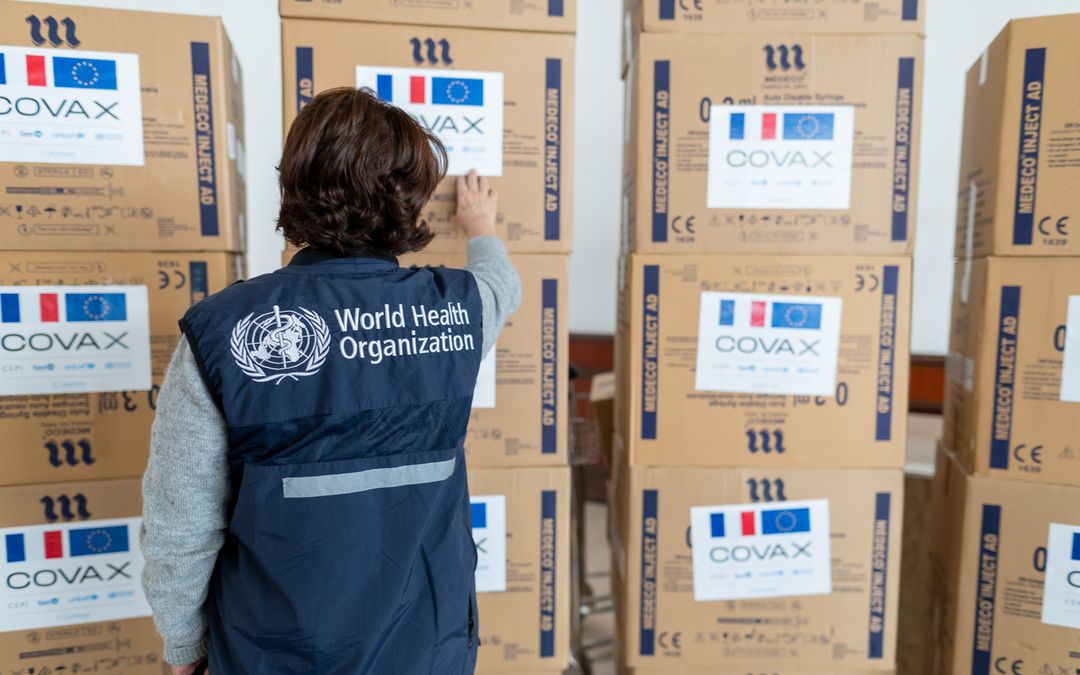
Photo: A WHO employee surveys a shipment of COVID-19 vaccines. (UNICEF Kyrgyzstan via Flickr | CC BY-ND 2.0).



.png)


