



Three years ago, we started the ENSURED project. Now it is coming to an end.
Over the last 36 months, we have done a lot of work to understand how to defend and transform global governance from different perspectives. The 45 researchers at our 14 partners have carried out 15 case studies on the reforms of international institutions informed by 200 interviews, updated datasets, fielded an expert survey, compared the findings across policy areas, and made our results accessible to policymakers. To get the word out, we have presented our findings during dozens of seminars and conferences in Europe and around the world. All our hard work is documented on this website.
As a farewell, it is perhaps worthwhile to provide a broader picture of what our project has meant in the context of the rapidly changing arena of global governance. To do so, we need to go back to the beginning.
We first started thinking about this project more than five years ago in the spring of 2021, as we noted in our first blog post. Then-US President Biden had just taken office and COVID-19 vaccinations were well underway in Western countries. The fight against pandemics and the need to jointly tackle other ‘new’ global challenges (from the climate crisis to digital threats and space policy) was prominently summarised in UN Secretary-General Guterres’ keynote report, Our Common Agenda. These challenges also underpinned the EU research call that our consortium applied for.
What a difference five years can make. Several weeks before the call’s deadline in April 2022, Russia invaded Ukraine. ChatGPT, first released in November 2022, showed the potential of AI to the wider world, resulting in nothing less than a technological rat race (or ‘Sputnik moment’). And when China eventually opened to the world after COVID-19 in January 2023, it came out assertive, and continued to expand its monopoly position on several raw materials, while exports linked to industrial overcapacity grew even further.
These were the background conditions as we implemented our ENSURED project on global governance, which ran between November 2023 and October 2026. While many assumed that the ‘global’ collaboration against COVID-19 would be a template for addressing a host of other challenges (from pandemics to climate change to biodiversity collapse), major powers have instead opted for rivalry, with global governance institutions drawing the short straw.
The re-election of US President Trump in November 2024 has made matters worse for global governance. Indeed, in every one of our 15 ENSURED case studies, we show that the United States is disengaging from cooperation, even if its methods vary from withdrawal to defunding to obstructionism and non-compliance. The unpredictability of his administration makes engagement difficult. But the fact that American leadership is no longer at the multilateral table has been even more problematic.
Standing up for traditional multilateral cooperation at such a moment is not fashionable. And the noise coming from the self-declared ‘middle powers’ – which champion, among others, ad hoc coalition shortcuts – is not always helpful either. Yet continued research on global governance remains important.
The community of global governance scholars, experts, diplomats, officials, civil society representatives, and other stakeholders is strong, even if global governance itself remains a work in progress.
When zooming out, we may indeed be standing at a critical juncture in international politics (and it may well be that the future path has been chosen: a new era in which the current multilateral order will soon be something of the past). Yet the world has previously faced systemic shocks, including world wars, that have not resulted in a decline of global governance institutions, rather the contrary. Indeed, recent research nuances the current troubles of international institutions in terms of withdrawal, contestation, and institutional responses to existential challenges.
Against this background, ENSURED research is tremendously valuable. We did not go into this project because we thought global governance transformation would be easy. We went into this project to learn more about the positions of major powers, understand their sensitivities, and explore areas of unexploited potential at this crucial moment in international affairs. When digging beneath the surface, our researchers have identified many ongoing reform processes and have helped clarify the positions of key actors towards these changes. Across the different cases, our researchers, for instance, identified that a multitude of major actors are engaged in reform efforts, with changing and complex conflict lines across the different global governance institutions we studied. In none of the cases can we reduce contestation over reform to simply ‘the United States versus China’. Such insights will be important if and when windows of opportunity in global governance, once again, open.
The other takeaway from our project is that interest in global governance research has not disappeared. As we travelled the world to exchange on our research and our findings, we came across many interested audiences eager to learn more about courses of action in global governance. The community of global governance scholars, experts, diplomats, officials, civil society representatives, and other stakeholders is strong, even if global governance itself remains a work in progress.
Hylke Dijkstra is the Project Coordinator of ENSURED and Full Professor of International Security and Cooperation at Maastricht University. Clara Weinhardt is the Deputy Project Coordinator of ENSURED and Associate Professor in International Relations at Maastricht University.
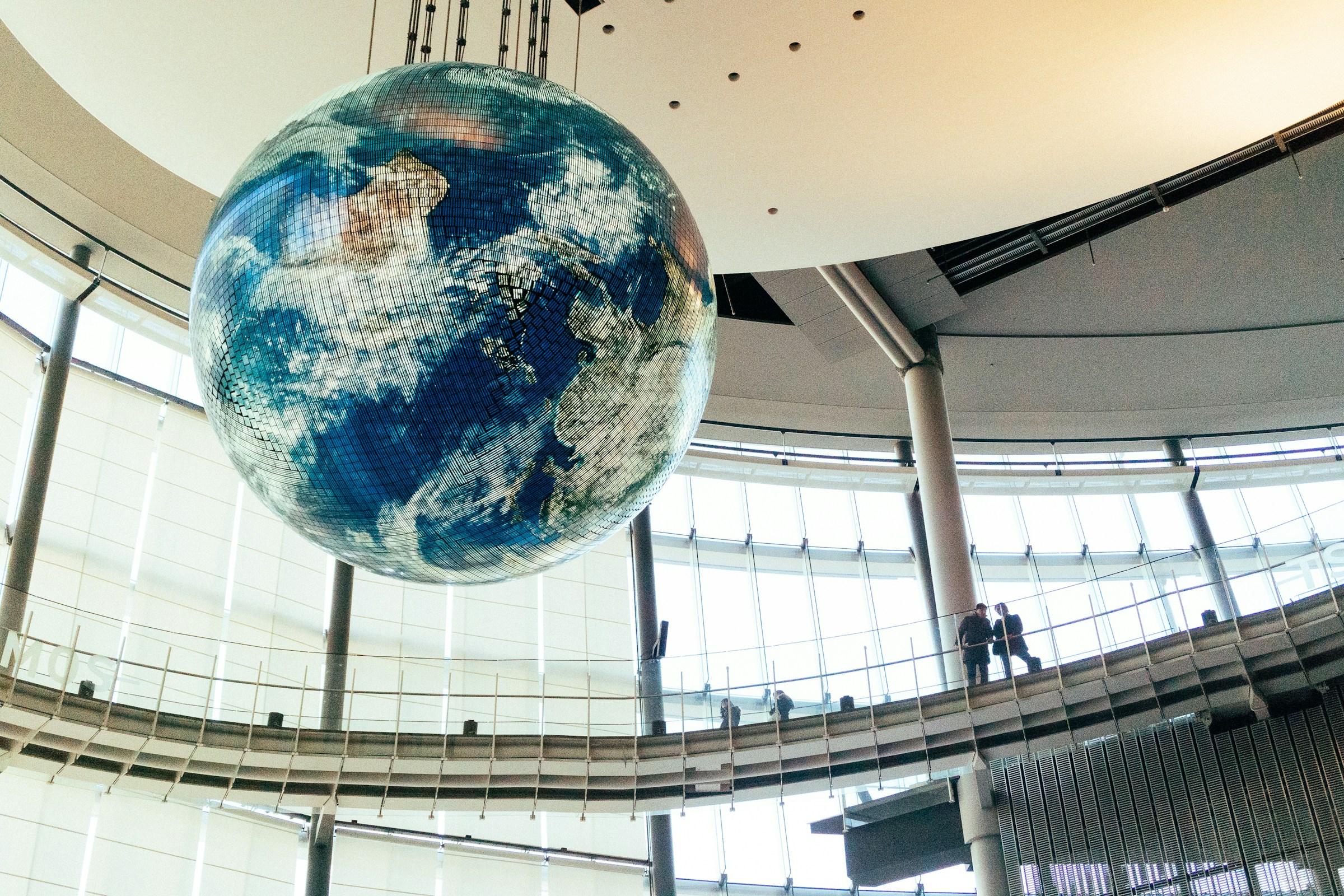
Photo: Jackie Alexander / Unsplash


