



As multilateralism faces mounting challenges, understanding the effectiveness and democratic character of international organisations (IOs) is essential for charting the future of global governance. This report offers a cross-cutting, system-wide analysis of how IO performance and inclusivity have evolved between 1980 and 2023. Against a backdrop of geopolitical rivalry, democratic backsliding, and recurring transnational crises, it examines how global governance is faring under intensifying pressures. Drawing on updated versions of two core datasets – the Performance of International Organisations (PIO) dataset on decision-making output and the Transaccess dataset on formal non-state access – the study assesses whether structural challenges have reshaped IOs’ institutional capacity and democratic character over the past decade.
IO effectiveness is operationalised as output performance, measured through the volume and growth rate of decisions adopted by IOs’ main intergovernmental bodies. These outputs constitute a necessary first step for achieving organisational goals and are a widely used indicator of institutional performance. Institutional democracy is conceptualised as the formal access of non-state actors (NSAs) to IOs, understood as the privileges that allow them to observe, address, or even vote in interstate decision-making.
The purpose of this report is to build an up-to-date knowledge base on the effectiveness and democracy of international institutions.
The report leverages newly collected data that extends both datasets to 2023, covering a diverse sample of regional and global institutions. It updates earlier research that ended in 2010 and 2015 and therefore could not account for major events shaping multilateralism in the last decade, such as Brexit, the Trump administration, the COVID-19 pandemic, and the wars in Ukraine and the Middle East.
The findings suggest that global governance has not suffered a systemic breakdown: output performance has remained broadly stable, and participatory rules have not undergone a rollback. Yet the expansion of democratic openness has largely stalled, indicating a plateau rather than further progress. Structured around the two updated datasets, the report analyses patterns in IO decision-making and non-state access before examining their interplay and the role of member-state regime type.
It identifies four central insights:
- Decision output has remained relatively stable, with modest pandemic-related declines followed by recovery in 2022–23. Several IOs – such as the EU, GEF, IAEA, OECD, WHO, and to some extent the WTO – show signs of increased productivity, while others display notable downward trends.
- Institutional openness has stagnated since 2010. While the rapid expansion of access observed between 1990 and 2010 has halted, there is no evidence of systematic decline. Existing access rules have proven robust despite global autocratisation.
- There is no evidence of a trade-off between effectiveness and inclusiveness. Instead, both output performance and openness appear to be shaped by shared structural factors – most importantly, the democratic composition of an organisation’s membership.
- Domestic regime type matters. IOs with higher democratic density tend to perform better and maintain more open institutional designs, while IOs experiencing increased autocratic membership show relative declines in both areas.
These findings indicate that multilateral institutions have proven institutionally robust amid a decade of turbulence, maintaining stable decision-making routines and preserving earlier gains in participatory governance. At the same time, the stagnation in openness and the growing influence of autocratic states signal potential risks ahead. Whether the observed patterns represent a temporary pause or the beginning of a structural turning point for global governance remains an open question.
Citation Recommendation: Sommerer, Thomas, and Ha Eun Choi. 2025. "Between Stability and Stagnation: The Performance and Openness of International Organisations in a Changing Global Order." ENSURED Research Report, no. 21 (December): 1–38. https://www.ensuredeurope.eu.
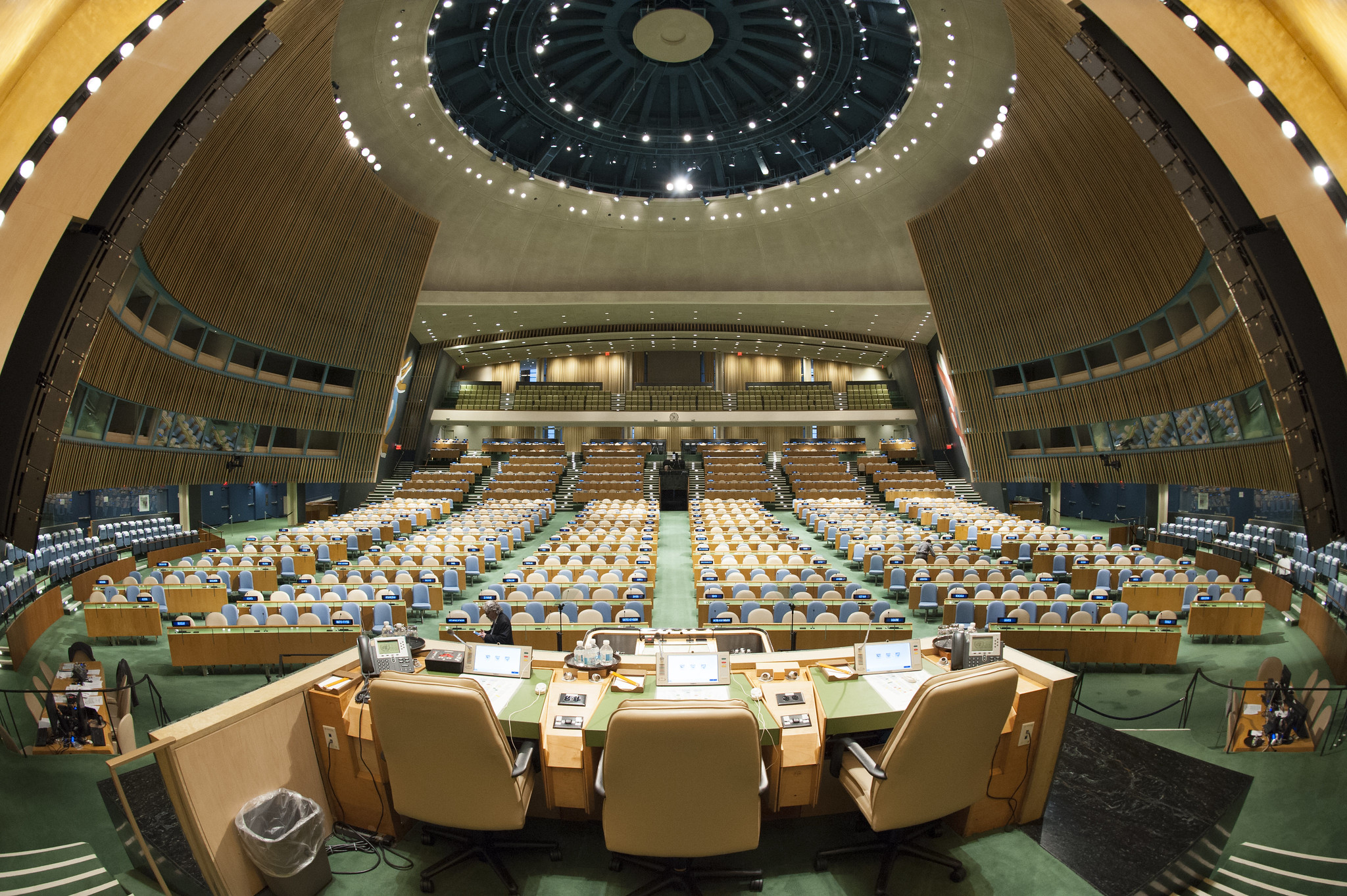
Photo: UN Photo / Flickr (CC BY-ND 2.0)


.png)


