


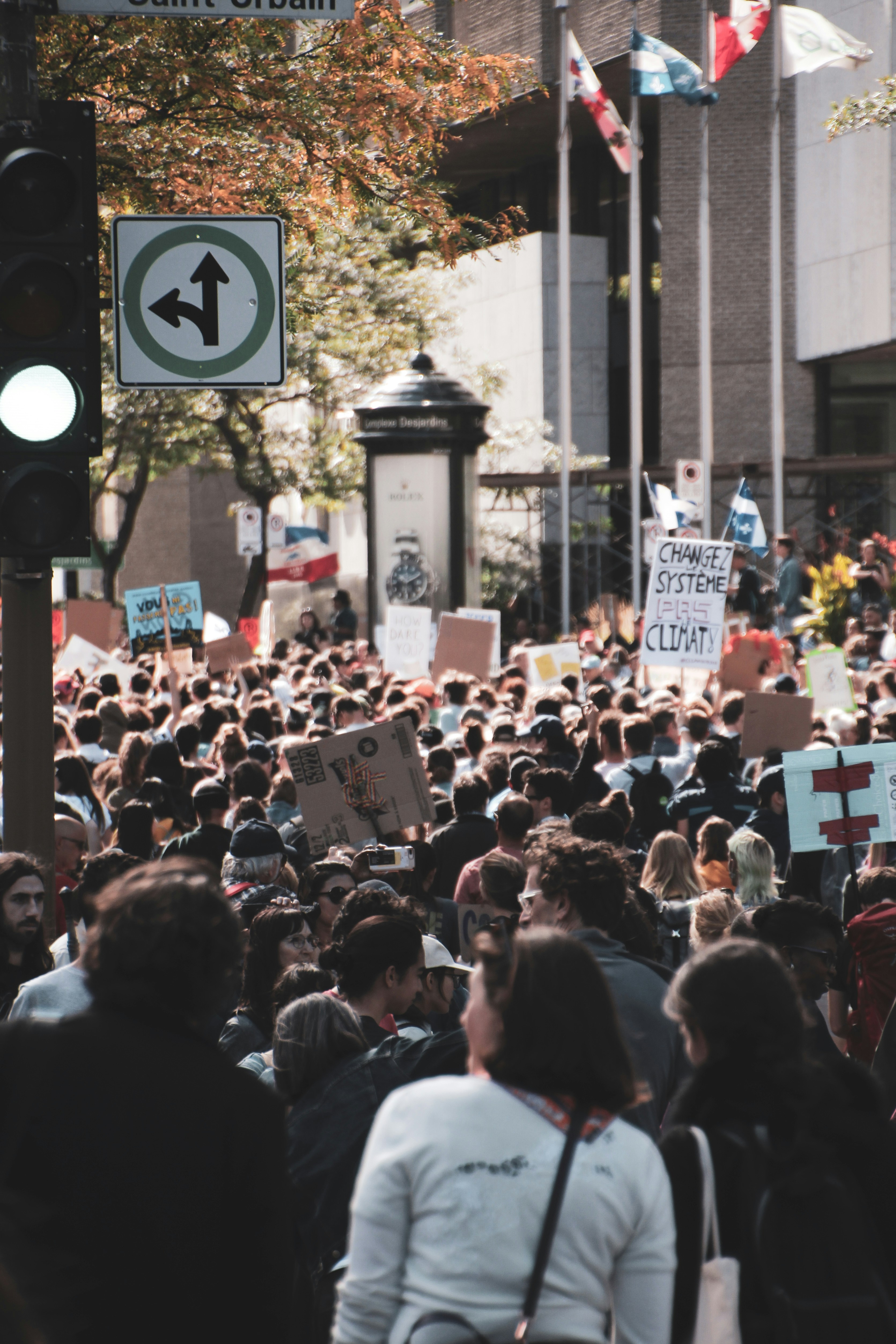

Between December 2025 and June 2026, ENSURED and CIVICUS brought together academic researchers and civil society practitioners for seven webinars about the future of global governance. Each session had its own focus: health, climate, migration, trade, human rights, digital governance and youth participation. Despite the institutions and the panellists involved being different, many of these conversations resulted in similar findings.
System Under Strain
In every session, panellists described institutions caught between geopolitical fragmentation, funding cuts, and their own procedural limitations. The Trump administration's dismantling of USAID in early 2025 slashed humanitarian funding overnight, affecting many organisations that had spent years building operational capacity and advocacy networks. Staff are also being cut from the UN human rights office, leaving many Special Procedures mandates without the resources to function. At COP30, fossil fuel lobbyists had easier access to negotiation rooms than most youth activists. The World Trade Organisation's (WTO) dispute settlement mechanism has been paralysed since 2019, leaving fifteen years of reform discussions without a meaningful outcome. The World Health Organisation (WHO) Pandemic Agreement has been a notable achievement for multilateralism, but remains stalled on the pathogen access and benefit sharing annex (PABS) negotiations.
The major issues across these policy areas are cross-cutting and affect one another. When funding falls, civil society loses its operational capacity at a crucial moment, precisely when its voice is most needed. The loss of a civil society voice makes states less willing to take risks and be ambitious, making it harder to build the cross-regional coalitions needed to push for meaningful reform. When progress is blocked, either through institutional inertia or through actors not complying, institutions will gradually lose credibility.
Civil Society Participation
In the seventh and last session on youth participation, one phrase came up which accurately described the challenges for both youth and civil society participation: access is not the same as power. Civil society organisations across health, digital governance and human rights are invited to participate, but excluded from the rooms where decisions are made, and often given no feedback on what happens. The WHO's PABS negotiations are closed to civil society entirely. Meanwhile the AI Framework Convention was drafted in a state-only group that shared texts only days before discussion, making any meaningful civil society response practically impossible. The UN Human Rights Council allows states to simply "note" Universal Periodic Review recommendations rather than accept or act on them, with no accountability mechanism for what happens next.
Youth advocates described spending years attending consultations where the same issues were raised, the same recommendations were made, and nothing changed. At COP28's Youth Climate Forum, young people were reportedly forbidden from using the term "climate refugees" because it was deemed too political for the host country, the United Arab Emirates (UAE). These cases represent routine experiences for civil society trying to engage with multilateral institutions.
Access is not the same as power.
What struck panellists across sessions was that this is not primarily a story of bad faith. Many people inside institutions genuinely want to do better, but the problems are structural. Institutions have been built to consult civil society without the procedural or financial architecture to translate that consultation into influence. When there is no formal mechanism for institutions to report back on which recommendations were acted on and why, consultation becomes a one-way extraction: organisations give their stories, their legitimacy and their grassroots credibility, and receive nothing in return that changes decisions.
Every session that touched on civil society access described similar barriers within institutions. The main gateway to civil society participation in most UN forums, the ECOSOC accreditation process, takes years, requires extensive documentation, and is run by a committee that one panellist described as "highly politicised and routinely used to block critical voices." Applications are frequently deferred through repetitive and technically trivial questioning. The process is far less accessible for grassroots groups, youth-led organisations and those operating in restricted civic environments compared to large, established, Global North organisations.
For organisations from the Global South, participation barriers multiply. Weaker passports require significantly more documentation for visa applications, and when invitation letters arrive late applications become impossible to submit in time. Per diems paid after travel rather than before create problems for individuals without savings. One panellist described colleagues who had to ask her personally for money to cover the cost of requesting official documents because their country's banking system did not allow them to hold an account. Translation and interpretation are rarely funded. Meetings are scheduled in time zones that make participation difficult for people in Asia and the Pacific. These restrictions all build up to exclude the communities closest to the problems being discussed.
Victories and Paths Forward
Panellists across sessions pointed to things that had improved across policy areas as well. In migration governance, a coalition campaign in Spain gathered 800,000 petition signatures and helped produce policy changes that could grant amnesty to over half a million migrants. On climate, youth advocacy at COP30 succeeded in securing the Belem Action Mechanism and pushed through the first reference to intergenerational equity in the adaptation text, despite pushback. In the case of human rights, the HRC continues to name and shame rights-violating states, strengthening the hand of local communities and advancing soft law. Authoritarian states' sustained efforts to control and undermine the HRC are also evidence of its continued relevance: "They are scared of it."
Sustained engagement over years is needed rather than episodic interventions around specific events.
Certain elements are needed to achieve these successes in all governance areas. Firstly, sustained engagement over years is needed rather than episodic interventions around specific events. Also, coalitions built across different regions and political groups are more influential and can gather more support. Another element is multi-level pressure applied simultaneously at global, national and local or industry level, so that no single arena can become a bottleneck. Several panellists also pointed to the importance of not waiting for institutional access. Civil society can build independent convening instruments from which to organise and lobby. Youth movements in Nepal, Bangladesh, Madagascar and Kenya also led the way, using digital tools including Discord to push for political change.
Final Points
Across seven sessions and more than fifteen panellists working in very different fields, certain points in common were found regarding pre-conditions for meaningful participation of civil society and youth at multilateral organisations.
- Flexible, long-term and early-disbursed funding.
- Constituency-based inclusion rather than quotas for participation.
- Accountability mechanisms so that institutions must explain what was taken forward, what was not, and why.
- Reform of the ECOSOC accreditation system to reduce barriers, in particular for smaller and Global South organisations.
- Recognition that youth participation is a cross-cutting challenge embedded in every policy domain.
Civil society has been making versions of these demands for decades, and they are features of how the multilateral system relates to civil society and to the communities it is supposed to serve.
Photo: Adam Hamel / Unsplash (Unsplash licence)



.png)


