


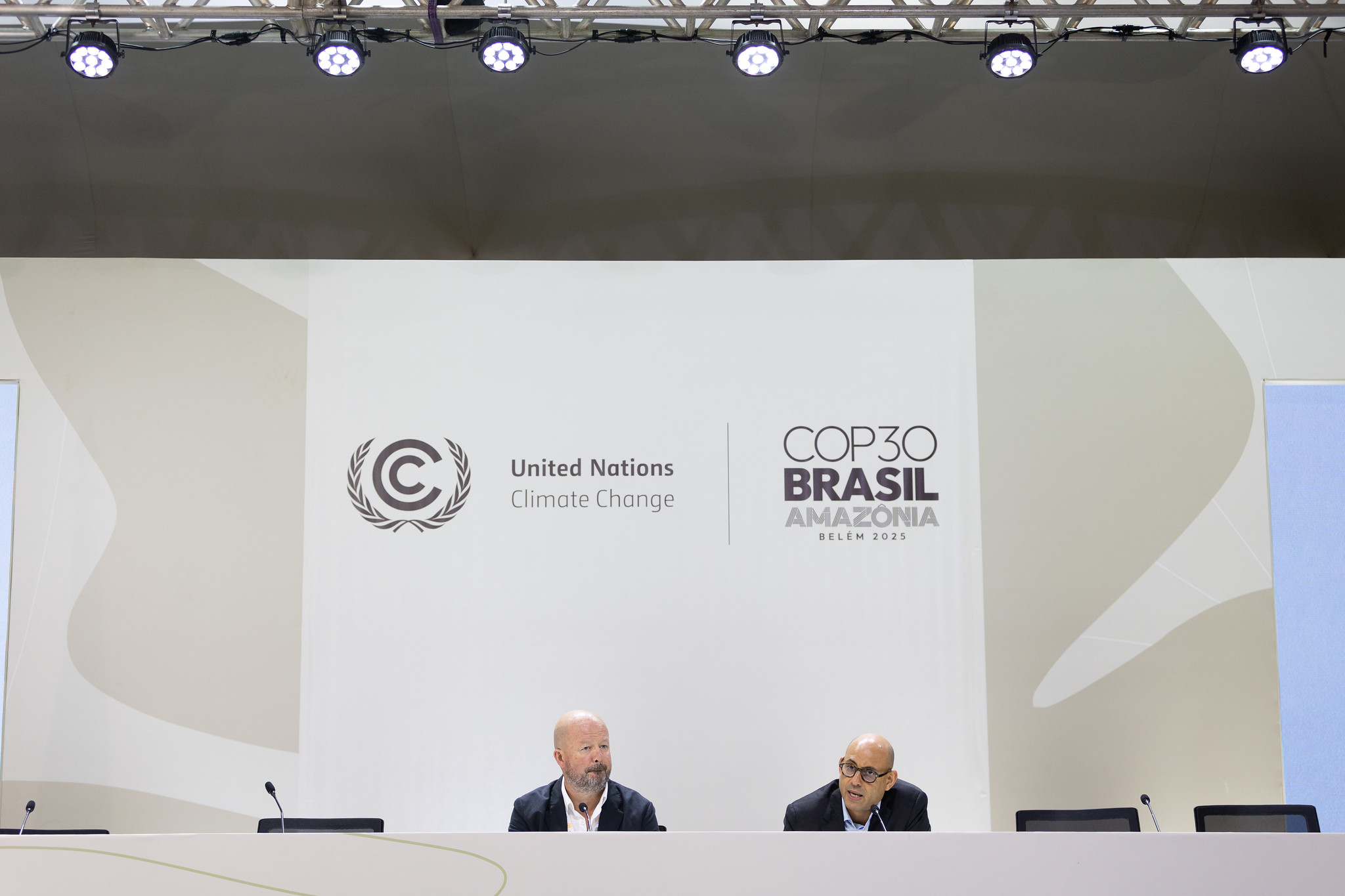

What does it take to reform the world's main climate negotiating body – and is it even possible? That is the central question of the first article in ENSURED's forthcoming special issue on global governance transformation in Global Policy, a leading interdisciplinary journal on international policy. Authored by ENSURED researchers Franziska Petri (KU Leuven) and Jan Karlas (Charles University Prague), "Climate Negotiations Under Scrutiny: Are UNFCCC COPs Up To the Challenge?" is available and open access.
With global emissions still rising and climate commitments lagging behind scientific recommendations, the COP's ability to drive meaningful action has come under increasing scrutiny. Petri and Karlas offer a synthetic assessment of both the COP's democratic quality and its effectiveness, identifying key challenges and evaluating the reform options available on both fronts. The analysis draws on 109 Earth Negotiation Bulletin reports spanning COP21 to COP29, party submissions, secretariat documents, and fieldwork including participation observation at the SB62 intersessional meetings in Bonn in June 2025.
The article finds that the COP has real strengths: relatively high formal equality among parties and greater openness to non-state actors than many comparable global bodies. At the same time, significant weaknesses persist in practice: vast inequalities between national delegations in capacity and resources, the outsized influence of major emitters, the overrepresentation of Global North organisations among observers, chronic agenda overload, and decisions that frequently reflect only the minimal achievable consensus.
The biggest obstacle to meaningful reform, Petri and Karlas argue, is the UNFCCC's consensus requirement, which means that far-reaching changes require the agreement of all parties. That said, incremental reform remains possible: streamlining agendas through intersessional negotiations, improving COP presidency practices and coordination, and building developing country capacity to participate more meaningfully. With the US having signalled its intention to withdraw from the UNFCCC and the wider UN system facing a funding crisis, keeping the process functional and legitimate matters enormously.
This article is the first in a special issue of Global Policy featuring ENSURED researchers on the topic of global governance transformation. Further articles in the issue will follow in the coming months.
Read the full article in Global Policy.
Check out ENSURED's research on climate policy.


.png)


