


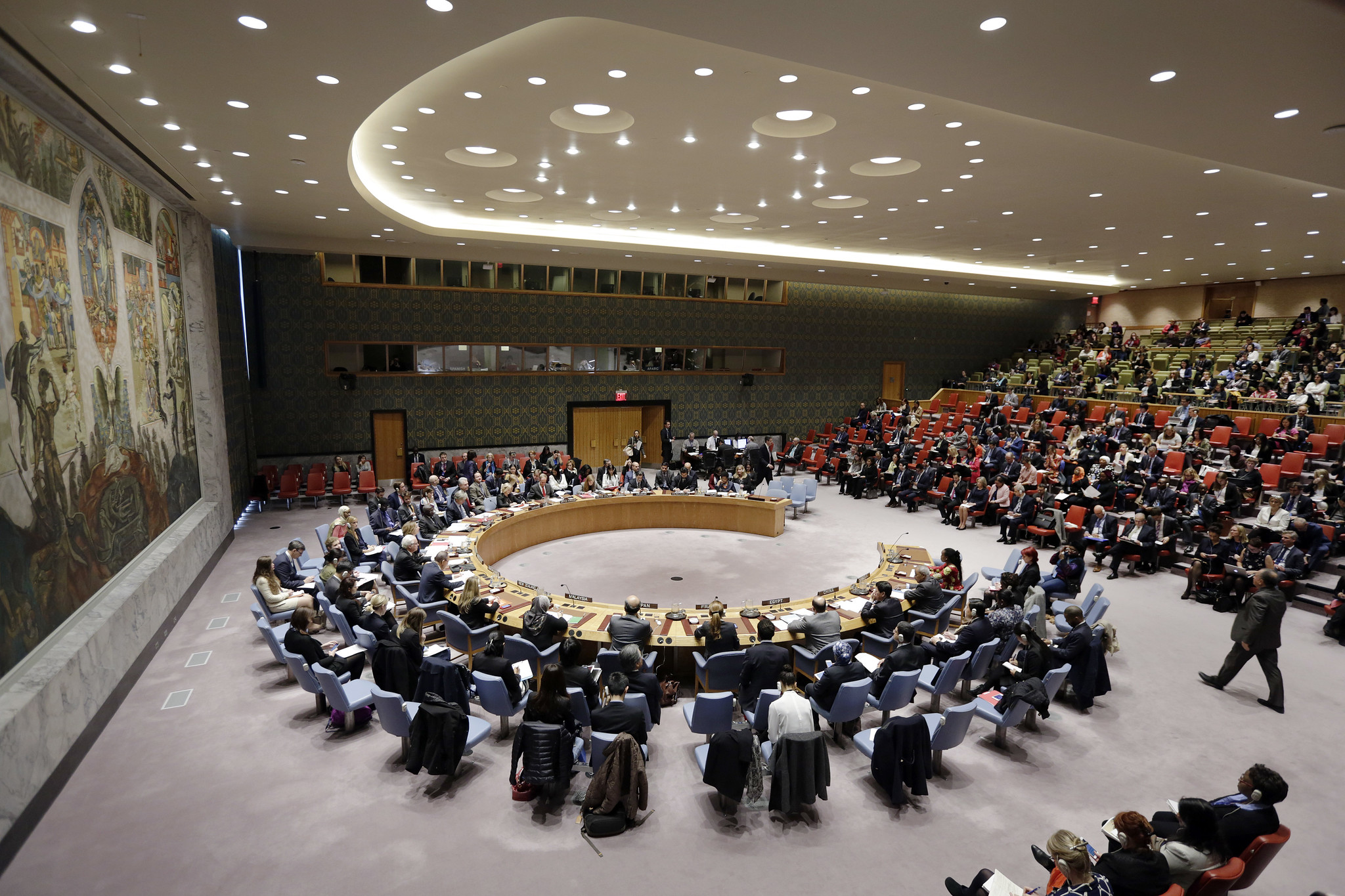

When it comes to the United Nations (UN), the Security Council is its most powerful organ. While the rest of the UN architecture is largely non-binding, the Security Council can authorise sanctions, peacekeeping deployments, and the use of force. No other body in the multilateral system has comparable enforcement powers, and its decisions are binding for all 193 member states. Eighty years on, no two of its permanent members have fought a declared war against each other – an achievement for an institution built on the consent of powerful states. But this consent now looks more fragile than ever. Growing demands from the Global South for greater representation, combined with repeated violations of the rules-based order, are straining the Security Council’s ability to function. This blog post examines pathways to incremental reform.
Why is there a need to reform the UN Security Council?
The Security Council has 15 members, 10 of which are elected by the UN General Assembly on two-year terms. The other five seats are permanent and carry veto power: these are held by China, France, Russia, the United Kingdom (UK), and the United States (US), often called the P5. Any one of these five powers can block a resolution, no matter how much support it has from other Security Council members or the wider UN membership. This bargain secured the participation of the P5, but it also created a built-in weakness in the Security Council’s foundations.
This structural weakness is becoming harder to ignore. Permanent members cast eight vetoes across seven draft resolutions in 2024, the most in a single year since 1986. Vetoes fell to four in 2025, but the Security Council’s overall output also decreased: that year, it adopted just 44 resolutions, the lowest total since 1991. On Gaza, it took the Council 171 days to pass a ceasefire resolution, after Washington had vetoed four earlier drafts. Russia, meanwhile, has used its veto to block any response to its full-scale invasion of Ukraine.
Beyond the veto, the Security Council’s membership is itself a problem. The five permanent seats reflect the balance of power in 1945, when most of Africa was still under colonial rule. None of Africa’s 54 states hold a permanent seat today, nor any of the 33 states of Latin America and the Caribbean. Expanding membership would make the institution more legitimate, but a larger Security Council could also be more gridlocked than before.
What are challenges in ongoing reform debates, and what blind spots remain?
Concerning the unbalanced membership, the African Union has put out a proposal that requested two new permanent African seats with full veto rights. However, this remains largely aspirational, as African states have not yet agreed on which countries these would be.
A related danger is that of ‘minilateralism’: that states will ignore and bypass the Security Council altogether and create new institutions. The Board of Peace is a recent case of this. It was created by the Security Council through Resolution 2803 in November 2025 as a transitional body to oversee postwar Gaza. However, it gives its chair, US President Trump, sweeping personal authority over its membership, decisions, and agenda. So far, its membership leans toward authoritarian states, and its founding charter mentions neither human rights nor the UN Charter.
The five permanent seats reflect the balance of power in 1945, when most of Africa was still under colonial rule.
Civil society’s access to the Security Council is also minimal, as there is no formal consultative status for non-governmental organisations. The only opening is the Arria-formula meeting – an informal session that any Security Council member can choose to convene, often with civil society briefers – but such meetings have become less frequent in recent years. Any permanent member can also block these meetings from being webcast on UN channels, as Russia did in 2023 to limit coverage of a briefing on the abduction of Ukrainian children during the war.
Formal reform would require amending the UN Charter, a process that requires a two-thirds vote and ratification in the General Assembly as well as ratification by all members of the P5. The Intergovernmental Negotiations (IGN) forum, set up in 2008 to negotiate Security Council reform, has met every year since without settling on a single text from which to negotiate.
Still, some progress has been made through changes to the Security Council’s working methods and voluntary pledges of veto restraint. The 2015 France-Mexico declaration asks permanent members to refrain from using the veto in cases of genocide or crimes against humanity – something that France and the UK adhere to.
What are pathways forward that the EU could engage in?
While the EU does not have a seat at the Security Council, four of its member states – Denmark, France, Greece, and Latvia – hold the Security Council’s rotating monthly presidency back to back from August to November 2026. This gives the EU a rare opportunity to push incremental reforms at a time of mounting challenges for the institution.
Five steps would help:
- Press the case for veto restraint: France and the UK should publicly invoke their record of not having cast a veto since 1989 to show that permanent membership is compatible with restraint, pressing China, Russia, and the US to do the same.
- Improve civil society access: The EU states holding the presidency until November 2026 should each commit to convening at least one Arria-formula meeting, publish the schedule in advance, and report back on how civil society shaped Security Council discussion.
- Prioritise working methods: EU states should share the lead on drafting resolutions with elected members, further open debates to non-members, and keep publicly posting IGN session records.
- Build relationships with reform coalitions: Engage the African Group and the G4 (Brazil, Germany, India, and Japan) through regular consultation outside the formal IGN process, positioning the EU as a reliable ally.
- Decline to legitimise the Board of Peace: EU member states must decline to join the Board of Peace and those that have already joined should leave it. A body operating outside the UN Charter, under one man’s control and without human rights provisions, is not an acceptable substitute for Security Council reform.
Samuel King is an ENSURED researcher and a Research Officer at CIVICUS, where he specialises in global governance, civil society, and human rights.
Photo: UN Women / Flickr




.png)


