


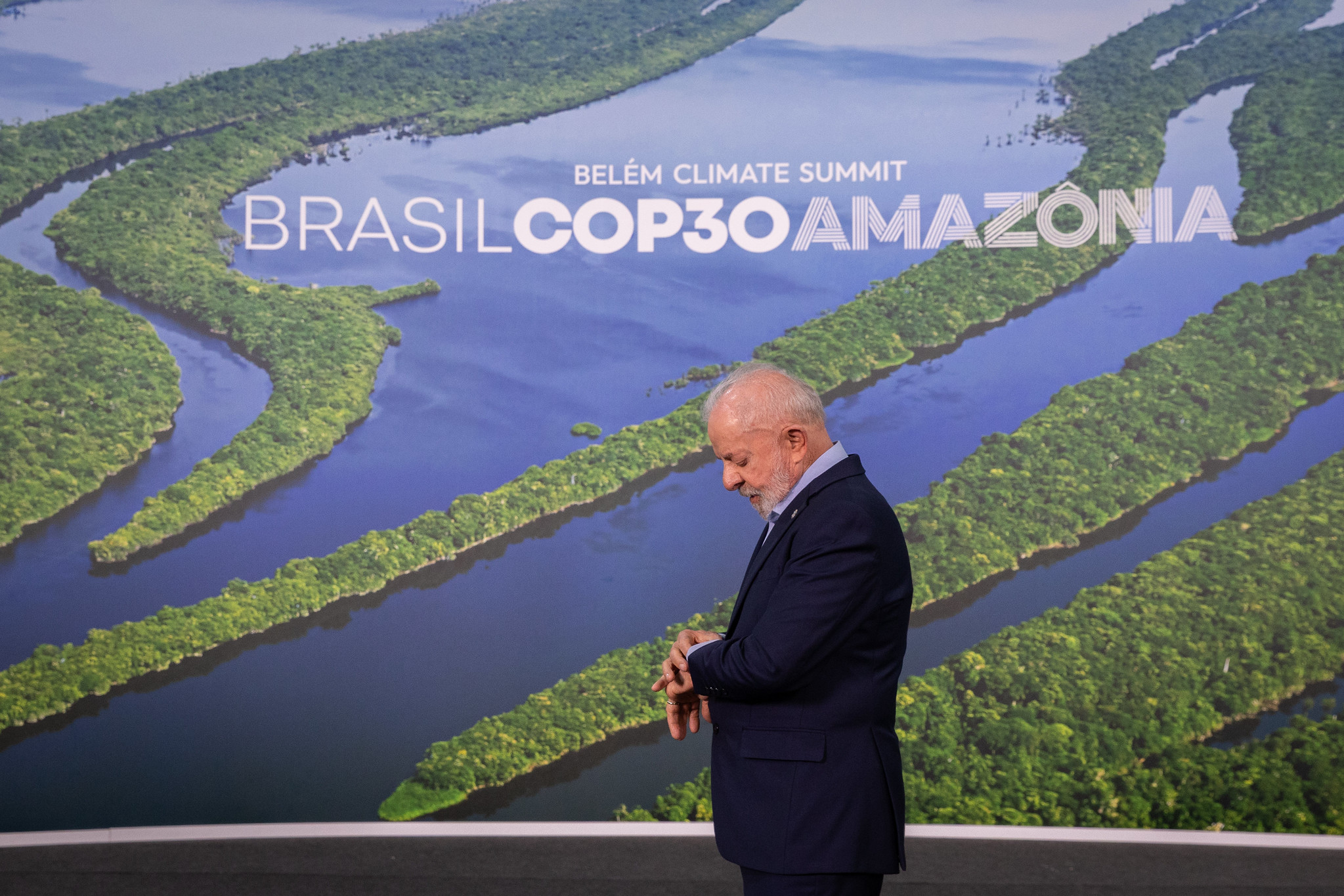

In your book, you write about a “powerful norm for climate action.” How do you see that norm being tested and/or reinforced at COP30 in Belém?
As with every year, all eyes are on the upcoming COP. But 2025 seems even more special – though not in a good way. 2025 has been the year of powerful Western states retreating and turning their backs on global climate change action. What this means for Belém: the idea of global climate action as a collective endeavour is being tested even before COP30 opens the doors. So, something lost, but can something be gained?
This year has not been without its small wins: 2025 saw both long-standing and new allies – such as the Bloomberg Philanthropies and newly founded "Adapt2win" campaign – step up their climate initiatives. Still, the atmosphere around climate action feels different now. Looking back, global climate efforts emerged as a strong norm in the 2000s and 2010s, culminating in the landmark Paris Agreement in 2015. Even in the "post"-pandemic world of 2021, there was a renewed sense of relief and enthusiasm for collective climate action at COP26, especially as then-President Biden had just recommitted the US to the Paris Agreement.
In my upcoming book, The Powerful Norm for Climate Change Action – How International Organizations Legitimate Themselves Amid Contestation, I deconstruct processes from 2009 to 2017 in which international organisation in the climate regime faced significant contestation. Among these is the United Nations Framework Convention on Climate Change (UNFCCC). The book investigates why and how international organisations in the global climate regime can self-legitimate despite being challenged. In it, I argue that contestation can serve as a potential trigger of legitimation when understood as part of an interconnected process. These dynamics are shaped by underlying norms, which act as guiding frameworks. Focusing on the UNFCCC and the International Energy Agency, the book explores four processes of contestation and their subsequent paths to legitimation.
As part of this process, climate change action serves as a shared normative framework that structures actor behaviour, informs legitimacy beliefs, and conditions both contestation and legitimation processes. This is important: Legitimacy helps determine whether international organisations are perceived as legitimate authorities to lead global efforts, particularly when this authority is questioned. But this also raises an important question: Is the role of the climate change action norm as a guiding frame (still) robust – and what might its future be? COP30, though not hosted in a fossil fuel-exporting country as in recent years, paints a cautiously hopeful picture. Brazil, this year’s host, seeks to advance a so-called "Action Agenda". Action… climate change action… it is right there in the name, right? So, all hope is not lost?
Many states are coming to COP30 with ambition but struggle to move from promise to practice – and still others are moving away from climate action altogether. How can the international climate regime regain credibility, given the growth in the implementation gap?
Host Brazil, but also the United Kingdom, is showing ambition ahead of this year’s COP – a promising sign that major actors in the Global "South" and "North" will continue to push for global climate action. Their focus seems to be on implementation and not only symbolism, signalling a shift toward tangible progress. However, 2025 has been marked by growing contestation surrounding climate commitments. The most prominent example, of course, is the second US withdrawal from the Paris Agreement following Donald J. Trump return to office in January. But other setbacks have emerged as well: in Germany, the new (socio-)conservative government has rolled back their climate goals and reopened the door to fossil fuels. It begs the question: Whatever happened to a green energy transition in this famously windy country?
Western countries have become more preoccupied with the many wars and conflicts in the recent years, expanding their defence budgets and rearming quickly. Of course, collective engagement in solving violent conflicts that cost many, many lives is a matter of utmost urgency. But one cannot help but wonder: If states invested with the same determination in fighting climate change – a crisis that also costs many lives and livelihoods – the goal of achieving CO2 neutrality by 2050 might not seem so out of reach. The global climate regime stands at a crossroad, as both recent events and the last years of global climate summits make abundantly clear.
Yet all is not lost. If countries like Brazil and the UK reclaim regional leadership for climate action – and if they can translate this leadership to the global scale, as a spokesperson of British Prime Minister Starmer recently stated – COP30 could mark a turning point. It may help to restore the credibility of the global climate regime, tackle "the implementation gap", and finally move the post-Paris rhetoric of implementation into genuine, sustained practice – to not just talk, but to walk.
COP30’s Amazon setting puts nature and justice in the spotlight. How can forest and biodiversity pledges become truly credible, rather than just symbolic?
Luckily, there is a new leader in town – and Brazil’s Lula da Silva means business. His flagship fund, the Tropical Forest Forever Facility (TFFF), will officially launch at COP30. With this initiative, Brazil is calling on global leaders to act with urgency and determination. Unlike last year’s COP presidency in Baku, which was criticised for trying to slow progress, Lula seems to speak for a different lobby that wants to push decisively for climate action.
Brazil aims to put forests back on the map – literally. The Brazilian government first introduced the idea of TFFF in November 2023 at COP28 in Dubai. TFFF is designed as a permanent mechanism to support the long-term conservation of tropical forests. As the TFFF concept note states:
"Financing the long-term conservation of tropical forests is therefore a crucial solution. It offers a high-impact, cost-effective pathway to reduce the impacts already felt, to pull the world back from the brink of tipping points, and restore humanity within a safe and just space. The TFFF provides sustained long-term incentives for maintaining and expanding tropical and subtropical moist broadleaf forests (TSMBF) in developing countries […]."
Additionally, Brazil wants to place a strong emphasis on sustainability in both the agriculture and energy transition, while also advocating for justice for vulnerable countries and Indigenous groups. At COP30, these priorities should not remain mere rhetoric: Brazil aims to secure binding commitments and ensure that industrial countries pay up. This would move COP30 beyond symbolism – and toward substance.
There is reason for hope, but also room for concern. History reminds us that whenever countries of the "Global South" ask the "Global North" to step up their commitments to climate finance, tensions tend to resurface. These conflicts often return to the negotiation table, as seen at COP15 in 2009 or COP19 in 2013. The former ended in a total breakdown; the latter was full of walkouts and breakups as G77 countries refused to tolerate "Western" stinginess and denial any longer. Will COP30 break free from these old patterns? Can Brazil – as host and leader – with the help of the UK and the UNFCCC, really push the process forward? The norm of climate change action may no longer hold the same unifying power it once did, but it remains very much present in the room – flanked, as ever, by hope and worry.
Laura von Allwörden is a consultant for energy sourcing. Before, she was a postdoctoral researcher and lecturer at the Chair of International Relations at the Christian-Albrechts-University Kiel, Germany (CAU). Prior, she was a doctoral researcher and PhD candidate in the ERC NestIOr research project, 'Who gets to live forever? Toward an Institutional Theory on the Decline and Death of International Organisations' at Maastricht University, The Netherlands.
In her research, Laura has specialised on international organisation, norms, and related practices in the global climate regime. In her research, she employs qualitative methods of interpretive, discursive, and practice analysis. Her work has been published in Bristol University Press, Oxford University Press, International Relations, Cambridge Review of International Affairs and Zeitschrift für Internationale Beziehungen.
Photo: UNFCCC / Flickr (CC BY-SA 2.0)


.png)


